Utah Trip (Days 9 &10)
Tuesday & Wednesday, 5/10/16 & 5/11/16, Desert in Utah 🙂
Hey guys, so I’m going to combine two more days from my Utah trip for you!
We woke up at 6:30 am on Tuesday and ate breakfast – the usual. Then we went out to work in the quarry at 7:30 am – but before that, Rocky gave us a minor lecture on the history of the area we were currently residing in (taken from my notes and the dino/hammer&chisel pics are from Google):
So, as I stated in the last blog, we were working in the Aaron Scott Quarry. It was discovered in 2000 – officially quarried in 2002.
The first bone that was found was a caudal (tail vertebrae) of a Sauropod (long tail, long neck dinosaurs), a string of about 6.
Sauropod:
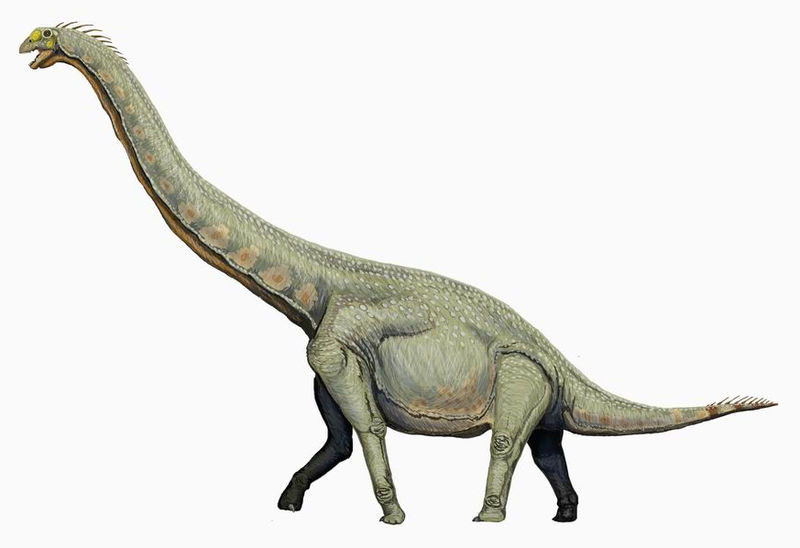
An example of a Sauropod that was common in this area was the Barosaurus – a long, lean Sauropod that looks like a Diplodocus dinosaur. But the main differentiation between the two is that a Barosaurus had 3 or 4 neck vertebrae (cervical vertebrae) that are much longer than that of a Diplodocus. (Past classes also found a skull of a Barosaurus in this area – which was pretty rare, apparently.)
Barosaurus:
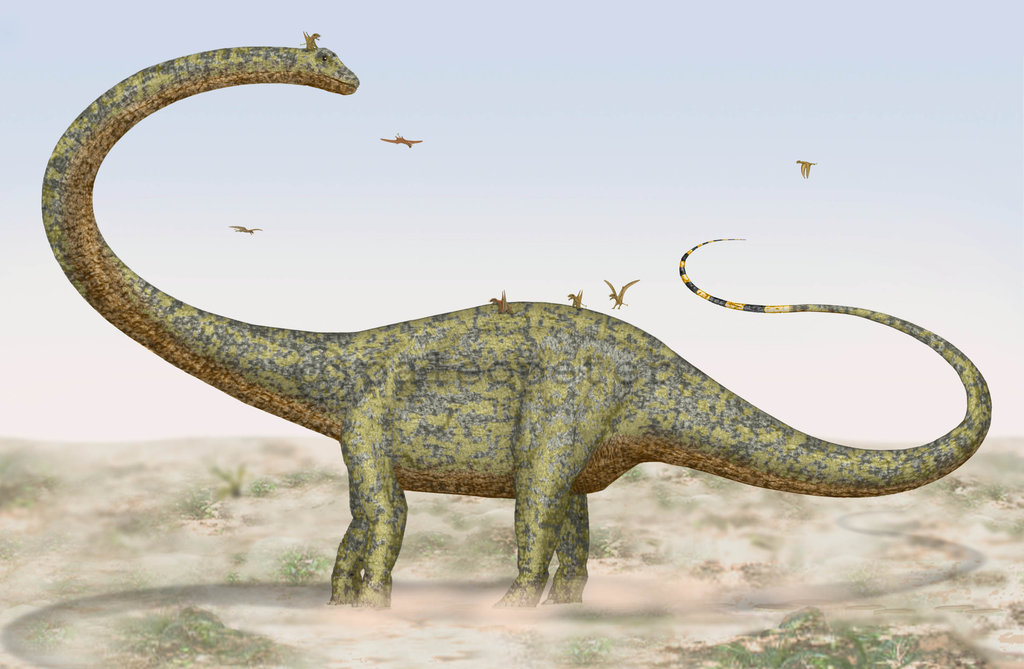
Diplodocus:

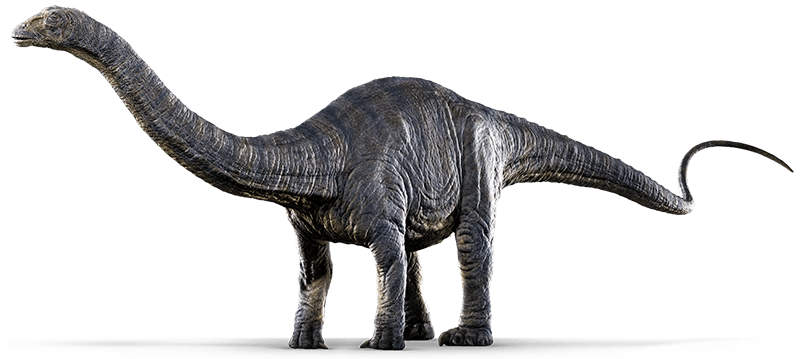
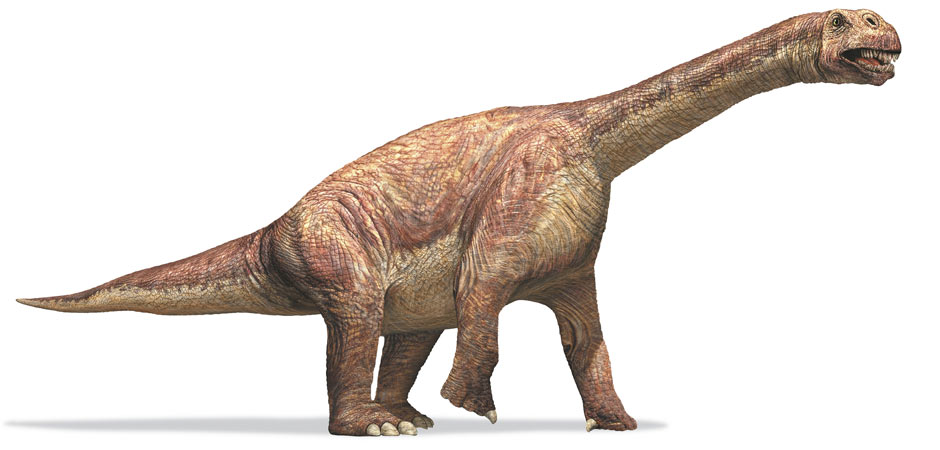
Other dinosaurs that have been found in this area: Apatosaurus, 2 teeth from a Camarasaurus (the dinosaur of the Morrison Formation), Theropods (carnivorous dinosaurs that have lizard hips – a common one in this area is an Allosaurus), Coelurus (another theropod), Dryosaurus, and the Camptosaurus.
Apatosaurus:
Camarasaurus:
Theropod:
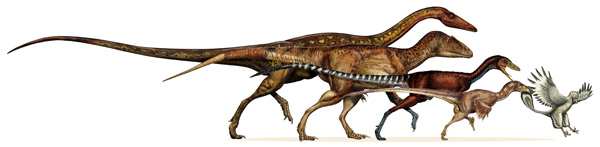
Coelurus:
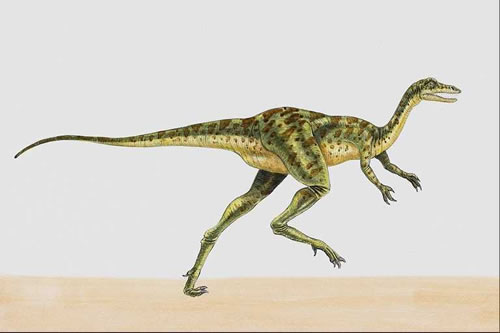
Dryosaurus:
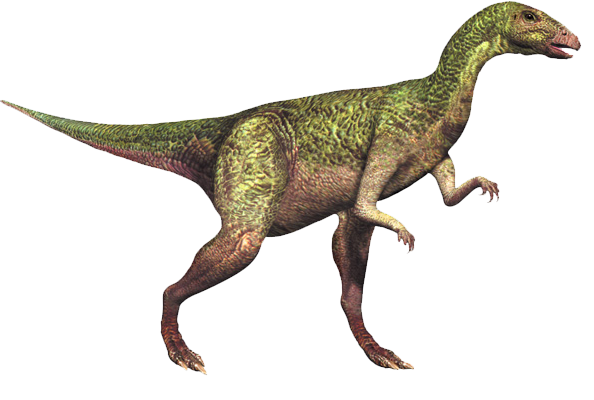
Camptosaurus:

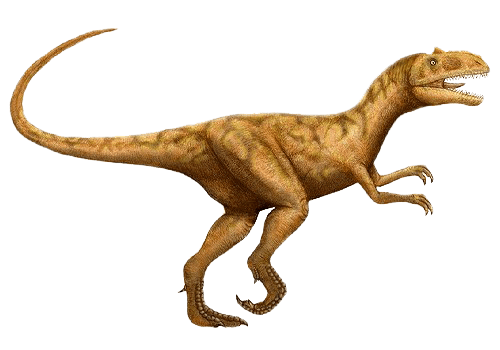
But as I stated before, one of the main dinosaurs (other than the Barosaurus) found in this area is the Allosaurus: the majority of the bones out there. We currently have dorsals, caudals, foot bones, teeth, and a claw or two of the Allosaurus. (However, we don’t have any skulls).
Allosaurus:
Other animal fossils found in this area: turtles, crocodiles, small lizards, river clams, small mammal teeth and jaws. These animals could have died in this area, or they could have dragged there by streams – the only way we can tell is by the fossil’s orientation.
In 2014 they found an imprint of a fish scale.
In the late Jurassic, the quarry used to be a fluvial environment transitioning into an equestrian: (it used to be a fresh-water environment that had wet seasons and dry seasons). There was probably a wide lake here.
The beds dip about 5-7 degrees, due to the San Rafael Swell and the Laramide Orogeny.
The standard tools for quarrying are hammers and chisels:

The quarry location belongs to the state of Utah and our permit is through them.
We needed a repository to have a permit to work there (where the bones are sent to), and our repository is the Cincinnati Museum – we traded a dinosaur skull for their repository.
Once we actually got out to the quarry, I worked near the dorsal bone again and chipped away at the matrix surrounding the bone with a hammer and chisel/screw-driver.
We stopped working around 12 and ate lunch, and then we had to wait for Janet and her group to arrive from Kentucky in order to continue working out in the quarry. Rocky originally thought that they were going to arrive within a few hours of 12, but they actually didn’t show up until around 8-8:30, so we weren’t able to work in the quarry for the rest of this day.
In the meantime, however…Casey and I spent about an hour or so cutting burlap (I’ll explain why later), and we also all decided to climb the mountain behind our campsite before making dinner at 5.
xxx
So, we split up into two groups: Coleman led Gene and Randy straight up the mountain, which was the shortest, but toughest path to take because there were no rocks or anything to grab onto – they climbed up a mountain on a very steep/slippery slope.
And Mitch took Casey, Jesse, Brent, Colby, and I up the back way – the longer, but slightly easier way. It was straight-up rock climbing with a little less of a steeper slope.
Almost as soon as we started the hike upwards, Colby ended up randomly finding an arrowhead. Everyone was astounded at first, angry that it wasn’t us who had found one, and incredibly jealous.
In short, we were doing great…until we were about halfway there.
I made the mistake of looking down and my fear of heights immediately kicked in – something I probably should’ve taken into consideration BEFORE the hike, but forgot about because it didn’t look that high up.
That and a few feet to my left, Brent stepped on a fairly large rock that slipped and slid down more rocks for a few seconds before settling…and Brent went along with it.
We all immediately stopped and asked him if he was okay and he just responded with: “Yup, I just almost died.” Then he brushed himself off and continued to climb, but he emerged with bloody legs.
Mitch asked him if he wanted to go back down and get that cleaned up, and he said no – so we all continued to climb. Mitch also turned to us and said: “If we could skip telling Rocky about that little incident, I would greatly appreciate it – because she’d kill me for not being careful enough.”
So, at that point, I was full-fledged freaking out. I started to hyperventilate and my hands & legs started shaking. I eventually just stopped and said: “Okay, this is good. I don’t need to climb up any higher.” Everyone asked me if I was sure and I said: “Yes.”
They eventually convinced me to climb higher – Jesse stayed right in front of me, and Brent followed right behind me. Jesse told me exactly where to step that he had already tested (to see if it was safe to step on), and Brent told me that he was right there if I slipped. Casey also shared her water bottle with me.
I was slightly embarrassed that they needed to take care of me like that, but I felt very grateful that they encouraged me to continue climbing – I hate having such a great fear of heights, and I definitely didn’t regret climbing up higher.
We eventually reached a level spot where there were a bunch of rocks lying around – and Mitch said that this was one of the spots in the desert where we could possibly find petrified wood.
However, those who wanted to reach the very top of the mountain had to continue climbing. Mitch, Brent, and I said that we were going to stay behind and look around for rocks – and Casey, Jesse, and Colby decided to continue climbing to the top.
So, I took this opportunity to take some pictures of the view and go rock hunting:
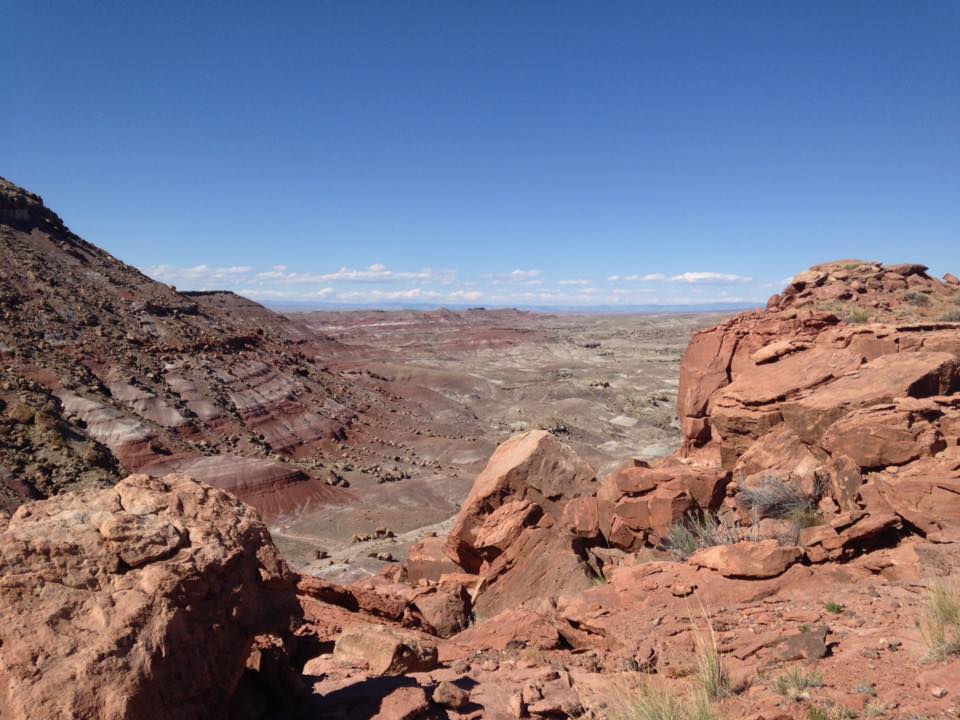
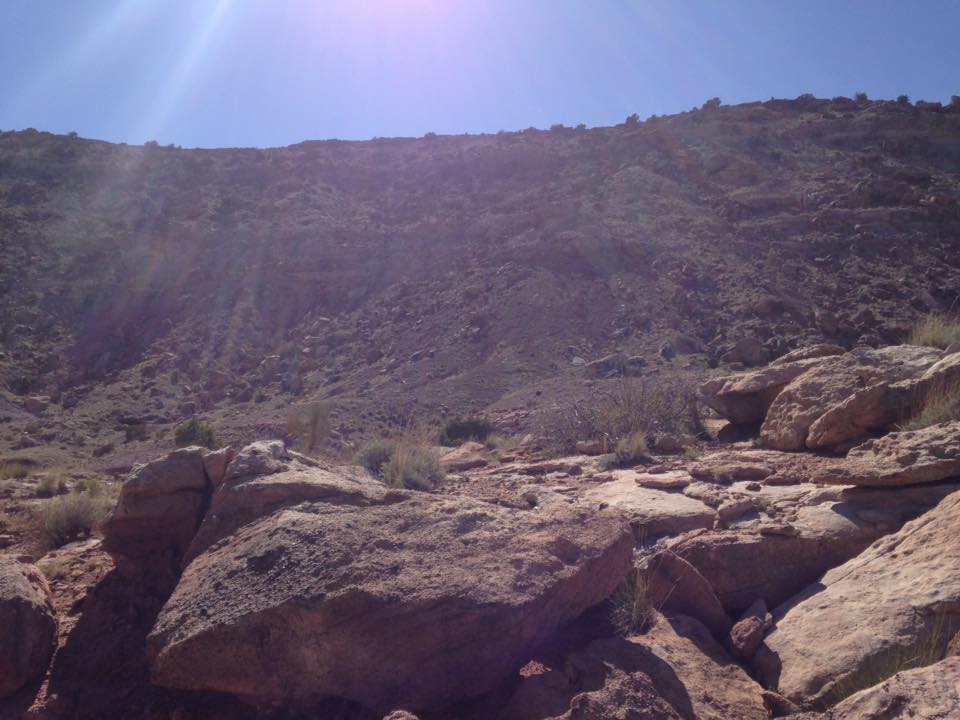
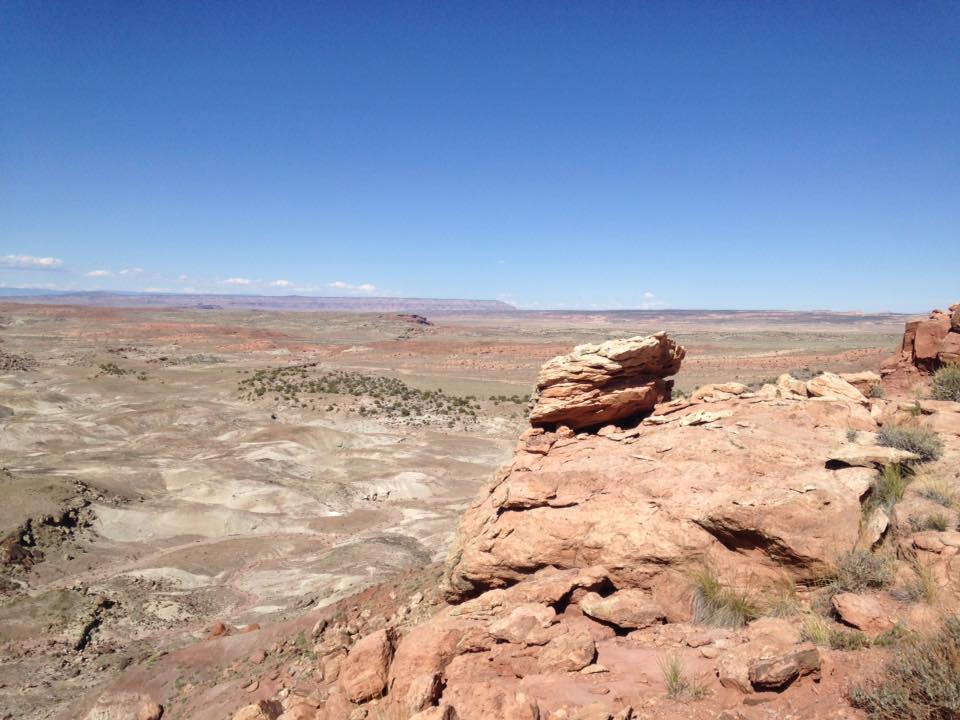
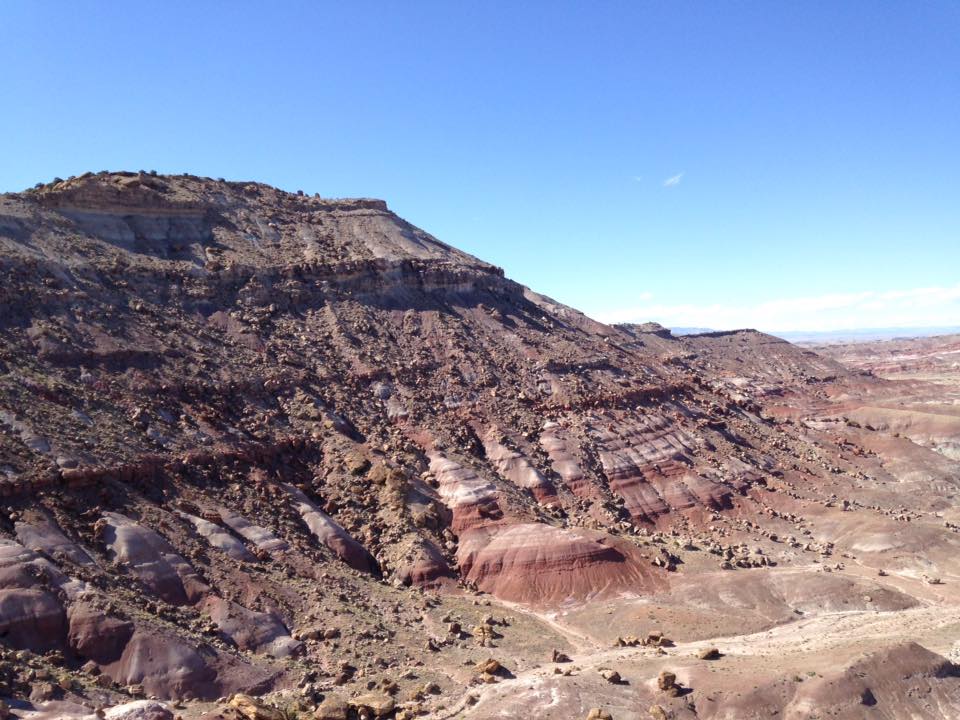
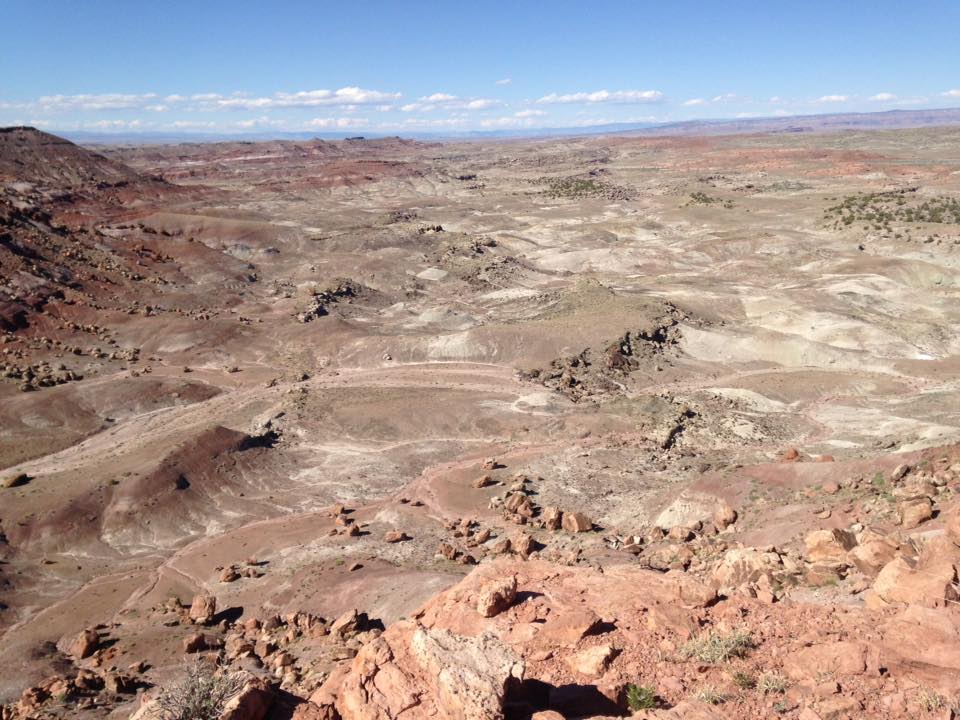
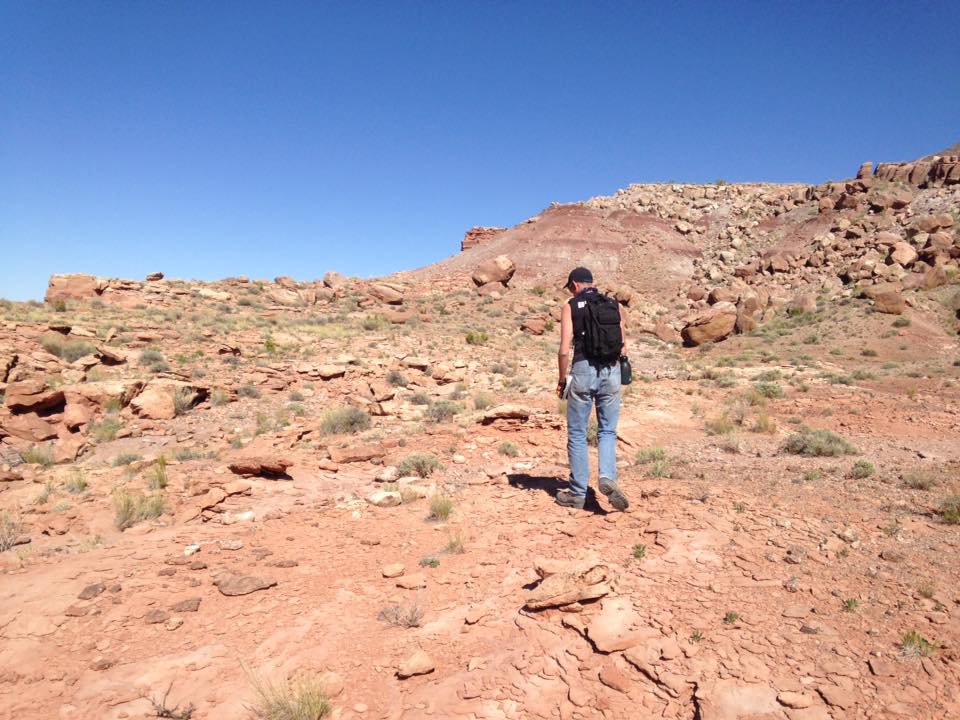
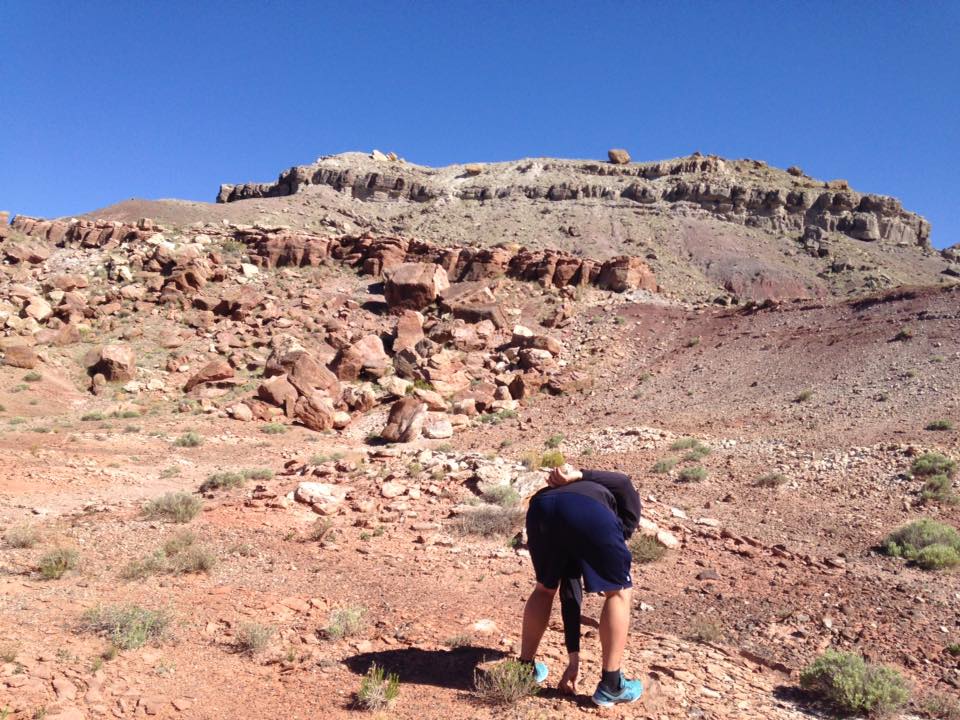
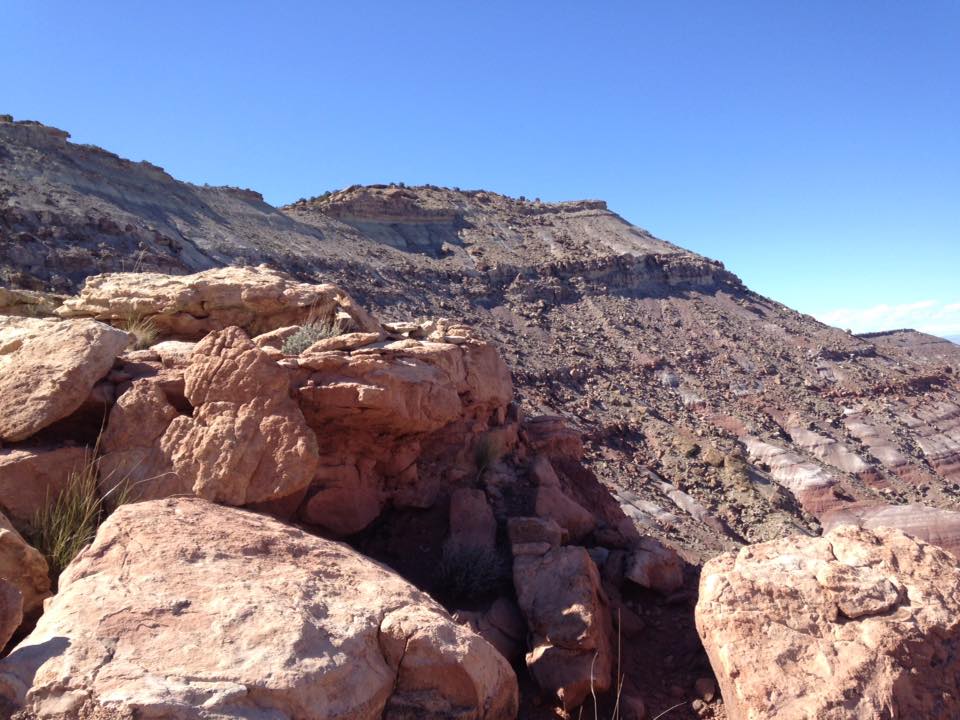
We ended milling around this area for a while before Casey, Jesse, and Colby climbed down to us. We found some more of the same rocks that we’d been finding as well as some Barite Rose stones. (Unfortunately we didn’t find any petrified wood).
However, it was getting close to 5, so we all had to go back down for dinner soon – so we started to head back down…which I realized was EVEN WORSE than climbing up.
Colby ended up helping me the most on the way down – we went extremely slowly and I thanked him profusely for keeping me calm on the way down once we finally reached the bottom.
I was beginning to feel like I had a brother-sister type relationship with the guys as well as a sister-sister relationship with Casey, which is always an awesome feeling to have about friends as an introverted person who has a hard time connecting with people.
Then we all walked back to the campsite and ate dinner – spaghetti and chilli. As I stated before, Janet and her group didn’t arrive until around 8-8:30, so Casey and I stayed in the van and talked while we waited for them to show up. Once they finally arrived, they ended up not needing help setting up their stuff, so I went to bed around 9:30 pm.
————————————————————————
Day 10:
We got up around 7-7:30 on this day and got ready to go out to the quarry. I ate cereal for breakfast and we started working around 8 – but this time, we were there with six (or seven) other men from a college in Kentucky. We also had another professor to listen to: Janet.
She was personally really sick and tired of working on the large dinosaur dorsal bone (the big chunk of bone that was underneath the tarp that we needed to uncover on the first day) after 4 years of working on it, so she wanted to FINALLY unearth this bone and take it out of the ground so that we could work on other things (this is the dorsal bone):
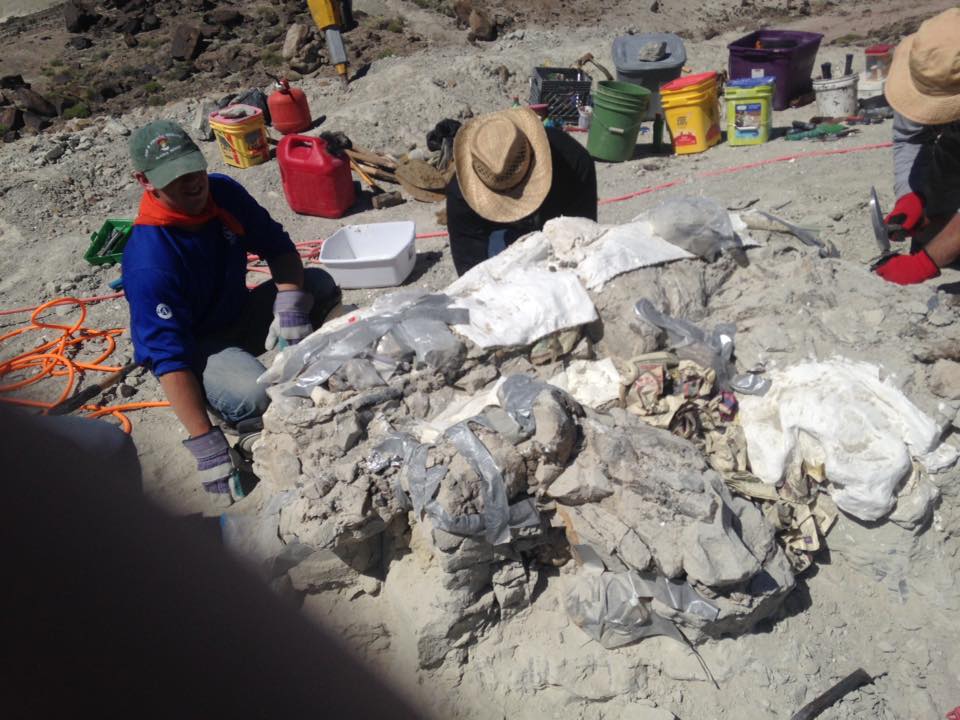
So her entire class was going to work on this spot specifically while the rest of us worked elsewhere from this point on – except for the fact that Casey and I had to prepare the large dinosaur dorsal bone and the surrounding matrix for casting.
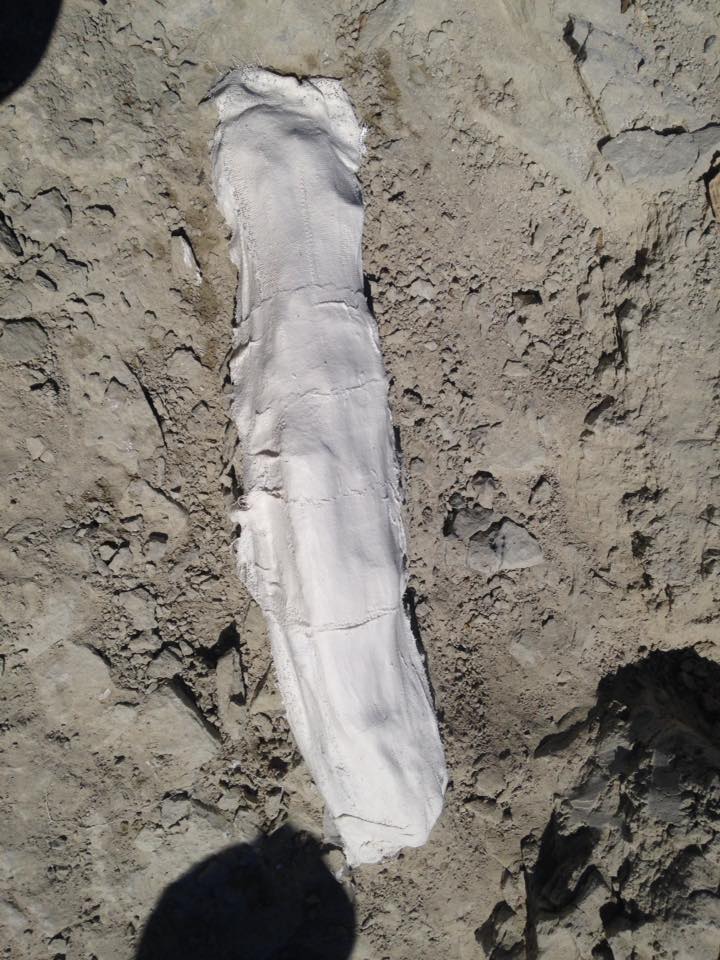
We were basically going to take the burlap that Casey and I cut up the day beforehand, dip it into plaster, and place them around the bones so that when we actually dug the whole thing up out of the ground – the bones wouldn’t fall apart into fragments. It was for protection.
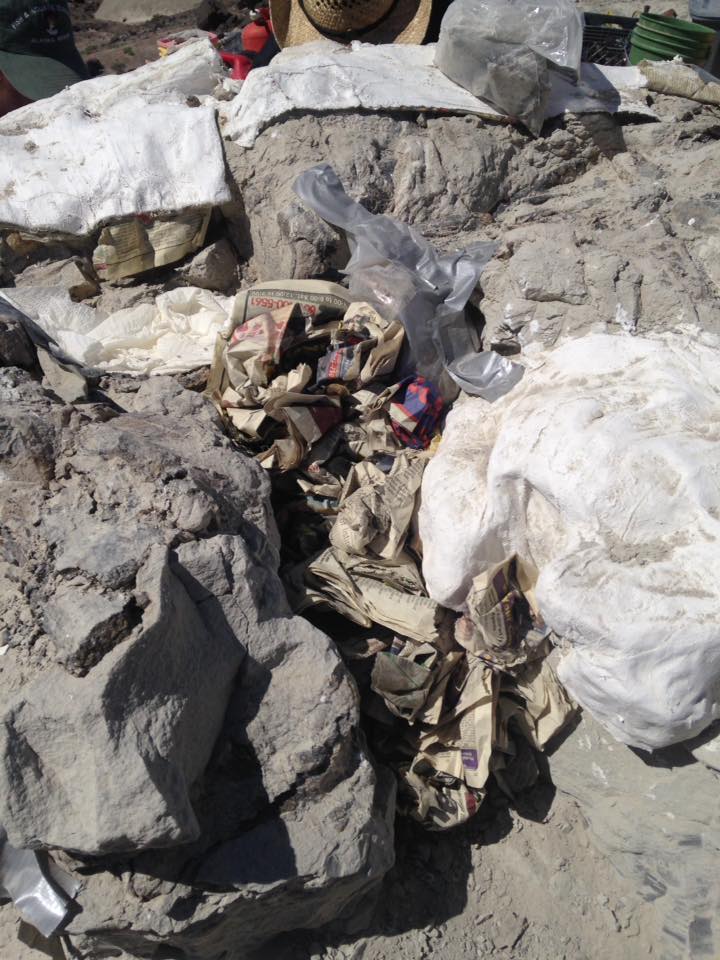
So, in order to prepare for that, Casey and I filled empty holes around the dorsal bone chunk with surrounding matrix with damp toilet paper, paper towels, and newspaper:
We also went on a supply run back to camp with Janet (she took us with her truck) to get more toilet paper, casting supplies, etc.
And once we got back and finished with those small jobs, I started working on uncovering an Allosaurus rib bone as well as a bone that was attached to the big dorsal bone that most of us were trying to uncover.
Then we took a break for lunch – and Janet gave us another lecture (taken from my notes – sorry if it seems random and sloppy):
Taphanomy – what happens to an animal from the time that it dies to the time that its discovered.
We map the bones out because we’re interested in the connection between those animals.
More history about the area:
The lake level rose and fell, but it never dried up.
During the time of deposition, there was a drought – the lake level had dropped, and the delta progressed into the lake.
The bones are not articulated (bones are scattered all over the place – the bones are not arranged as a clear skeleton), which suggests that some of these dinosaurs did not die in the quarry itself – some of the bones were probably swept in by a stream – which is why we need to take note of the bones’ orientation.
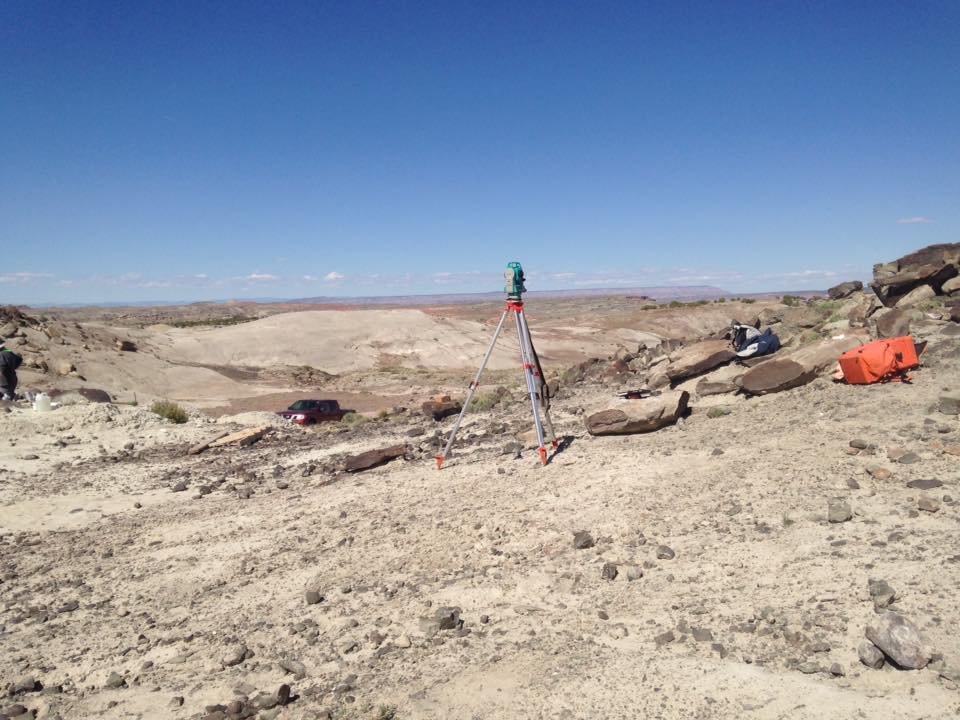
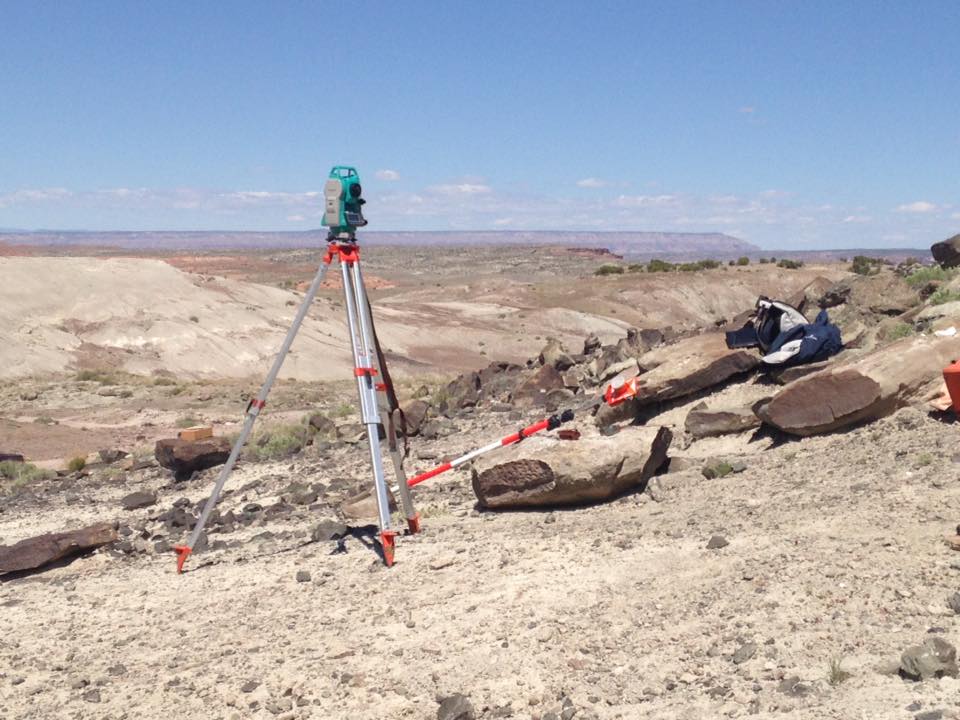
So, we use a compass (totaling station) to measure the orientation. Here’s a basic layout of the bones and their placement within the quarry (From the view right above the quarry):
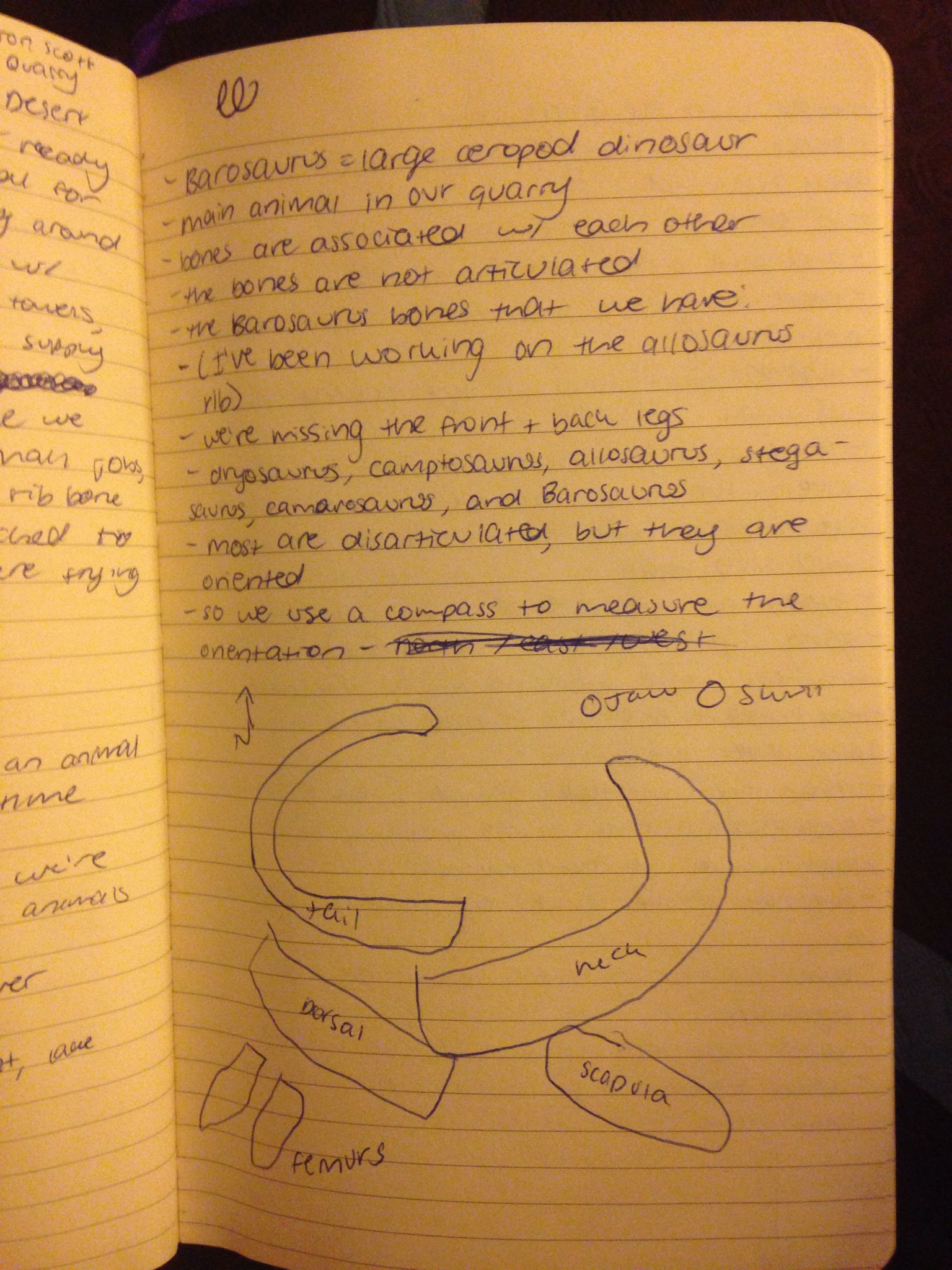
We know that the river was flowing west.
The bones either floated down the river or they tumbled.
So, some are positioned north/south (those are the ones that tumbled) and some are positioned east/west (those floated).
At the base of the quarry, there may have also been wave activity – the sedimentology of the quarry tells us that: Little mud balls ripped up from the lake/river. The mud cracked during a drought, and when the water came back in, it rolled the mud into balls.
What we worked on was limestone, but above the quarry, there was siltstone (which is much softer than limestone – finer grained). The bones were still exposed when the lake level grew – then the limestone formed around it.
The Apatosaurus and Barosaurus probably died right where we found them, and the rest of the bones were probably washed in (we can tell because the bones that were washed in had a backwards signature – bones that were not washed in had a lake signature).
For example: water from the lake seeped into the Barosaurus bones, which recorded that signature data.
Oxygen was preserved in the femur and the isotopes recorded the climate (how dry it was – how much evaporation took place).
The bone grows like a tree – inside of the bone recorded a humid environment, and the outside recorded an arid environment.
This means that the climate went from humid to arid over and over again.
Drought or the Allosaurus killed the Barosaurus.
The green layers of sediment are lake sediments, and the red layers of sediment are from when the lake dried up. That’s why the nolls and hills have rock layers that are green at the base and red at the top.
At the very top is Buckhorn Conglomerate.
And after this lecture, we went back out to the quarry around 2 pm and stayed until 6.
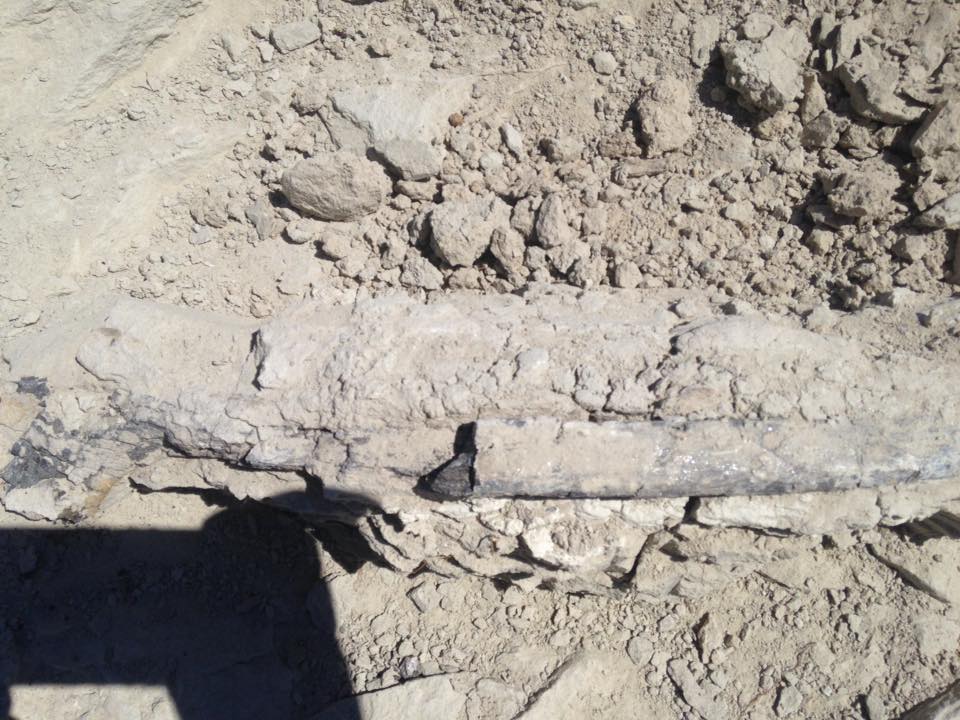
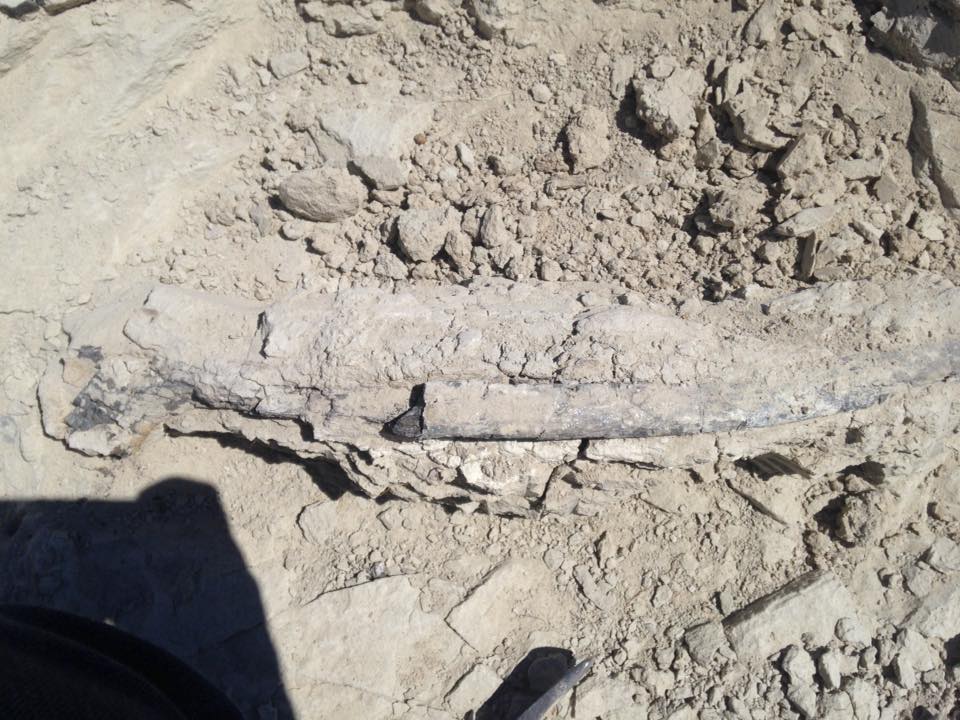
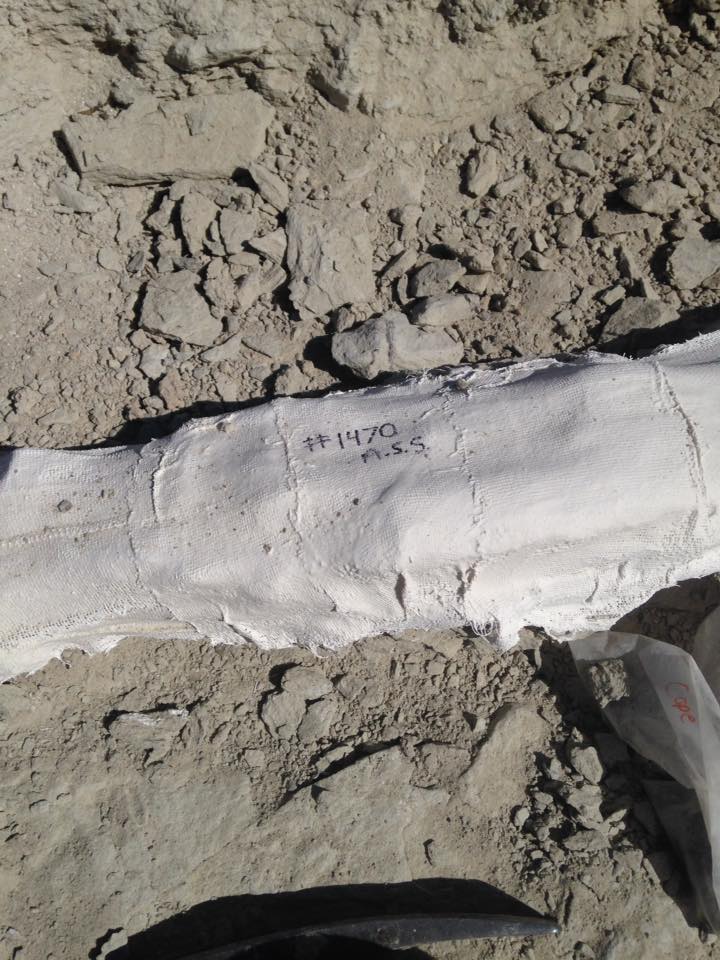
We cast my Allosaurus rib bone and numbered it: 1470.
I marked it in Rocky’s black record book and then I worked on another rib bone that I actually discovered (the Allosaurus rib bone had already been discovered – I just unearthed it).
Here’s what the Allosaurus rib bone looked like before I unearthed and casted it:
And after casting:
And here’s what my discovered rib bone looked like:
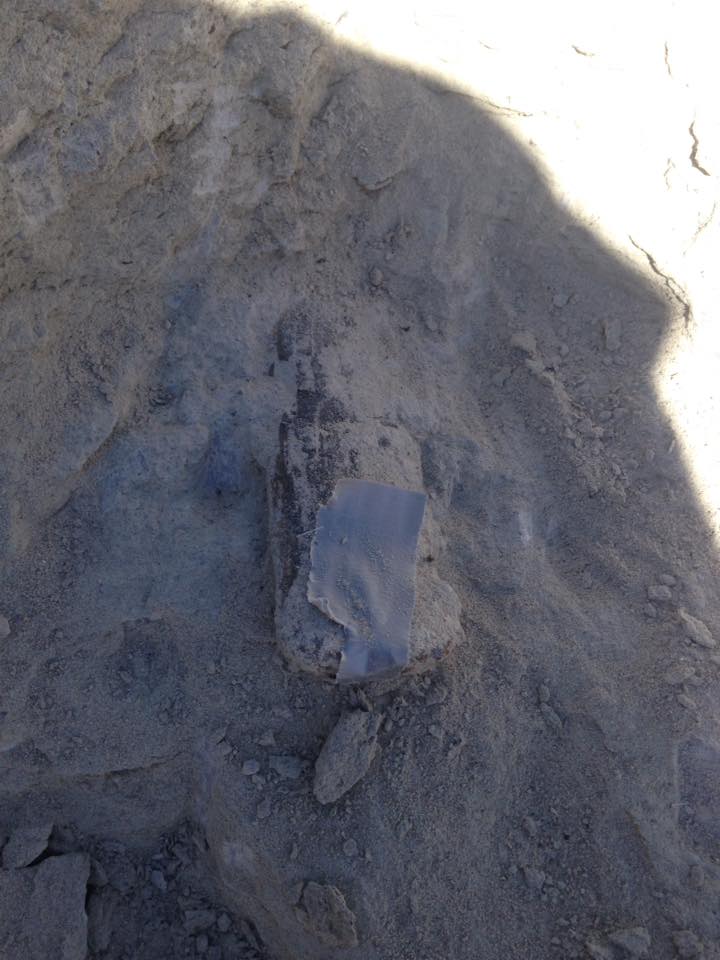

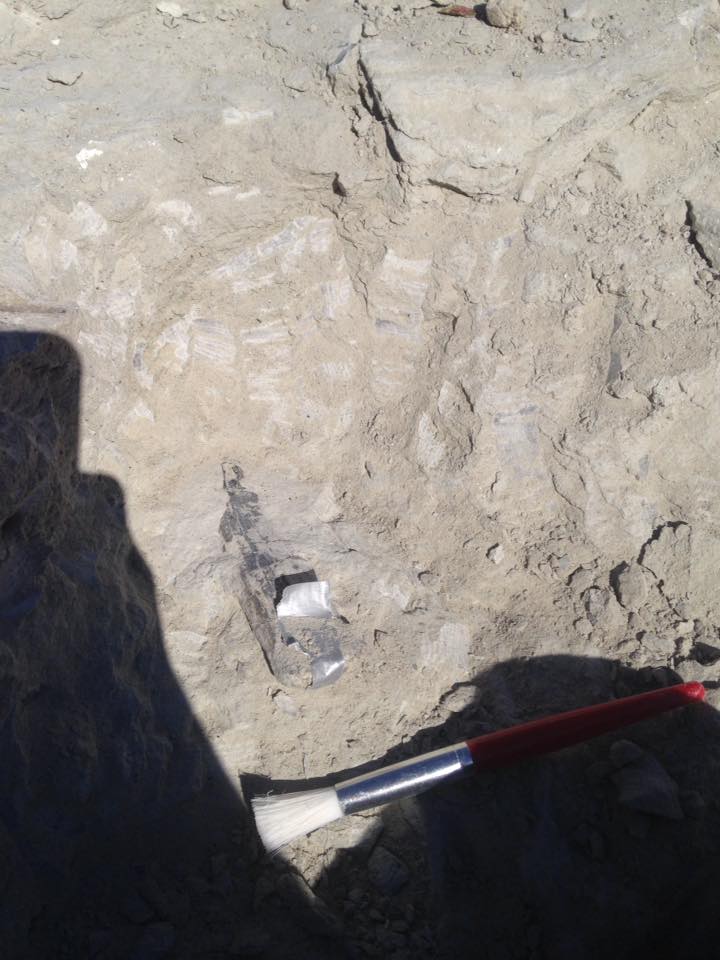
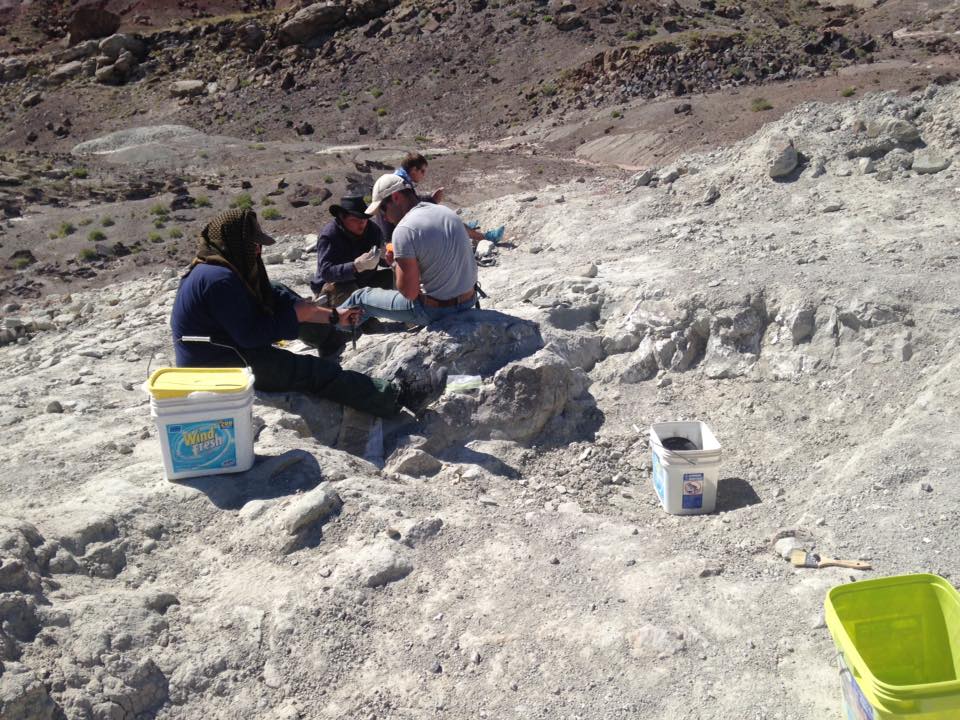
And here are some general pictures of the quarry:
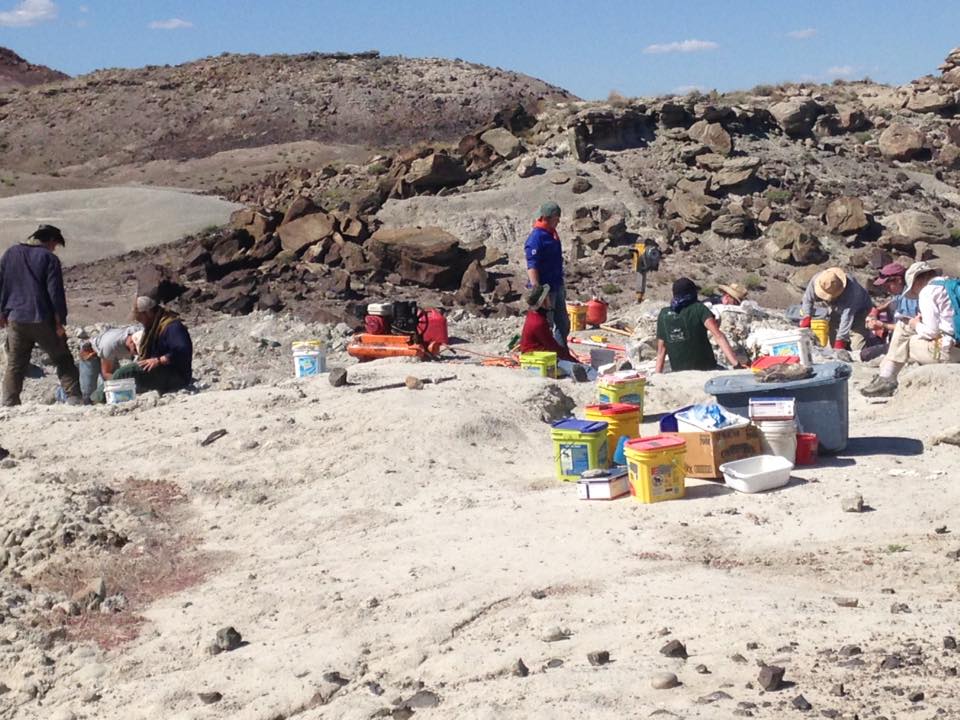
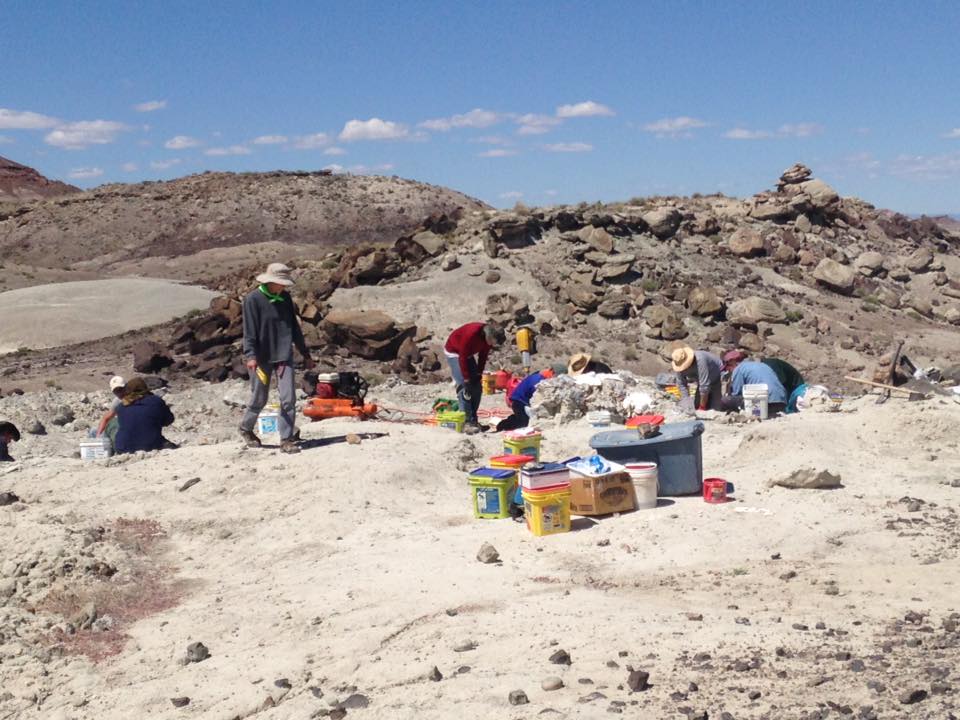
These next two pictures are of the “Totaling Station” – which measured the orientation of the bones:
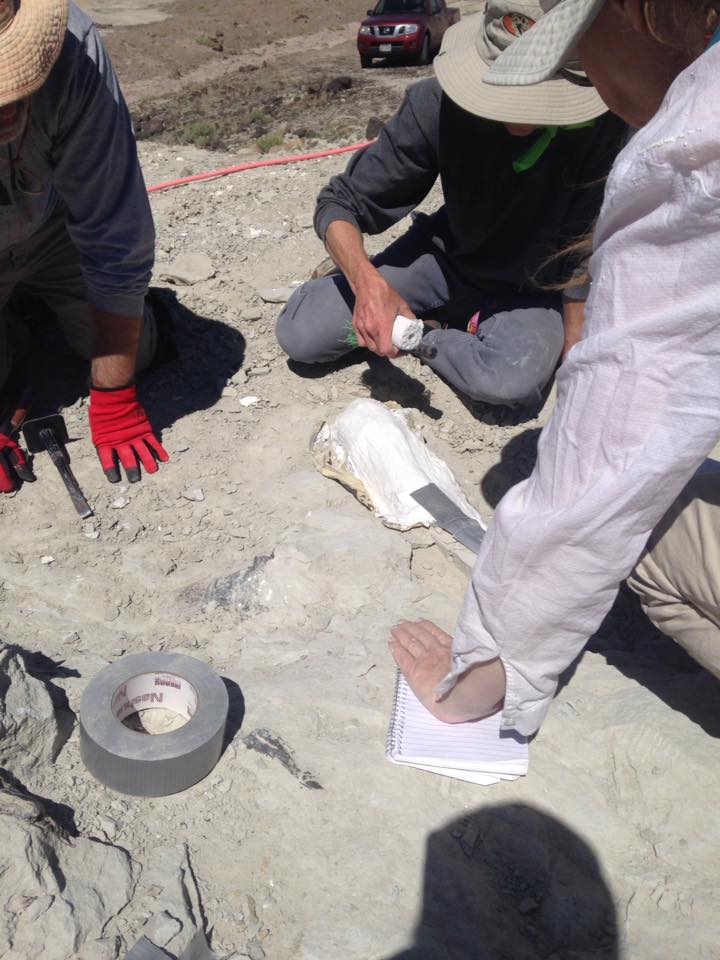

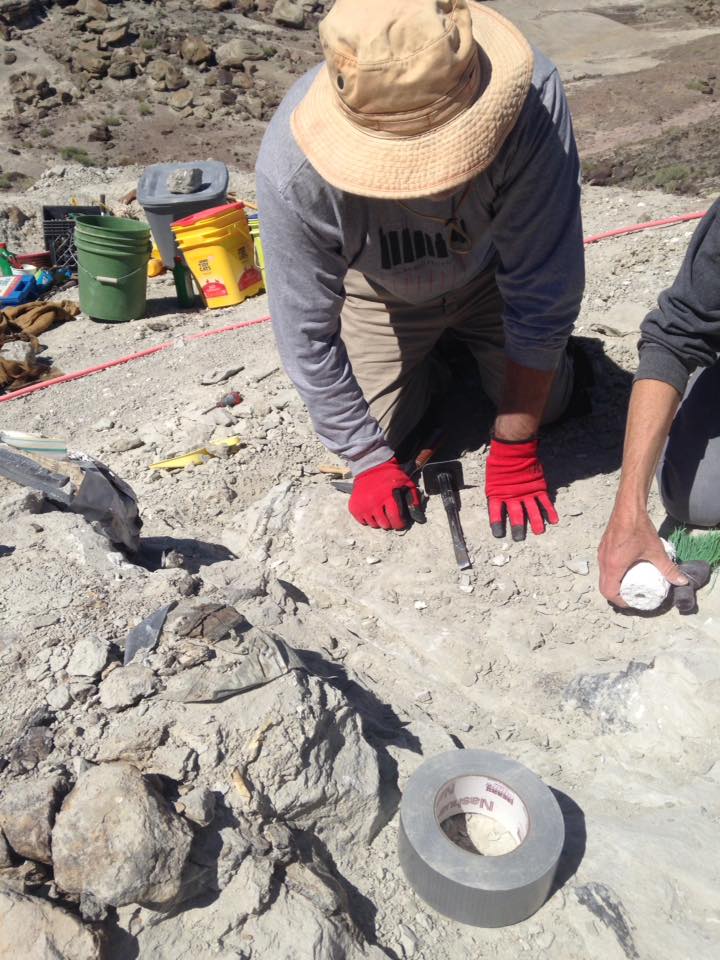
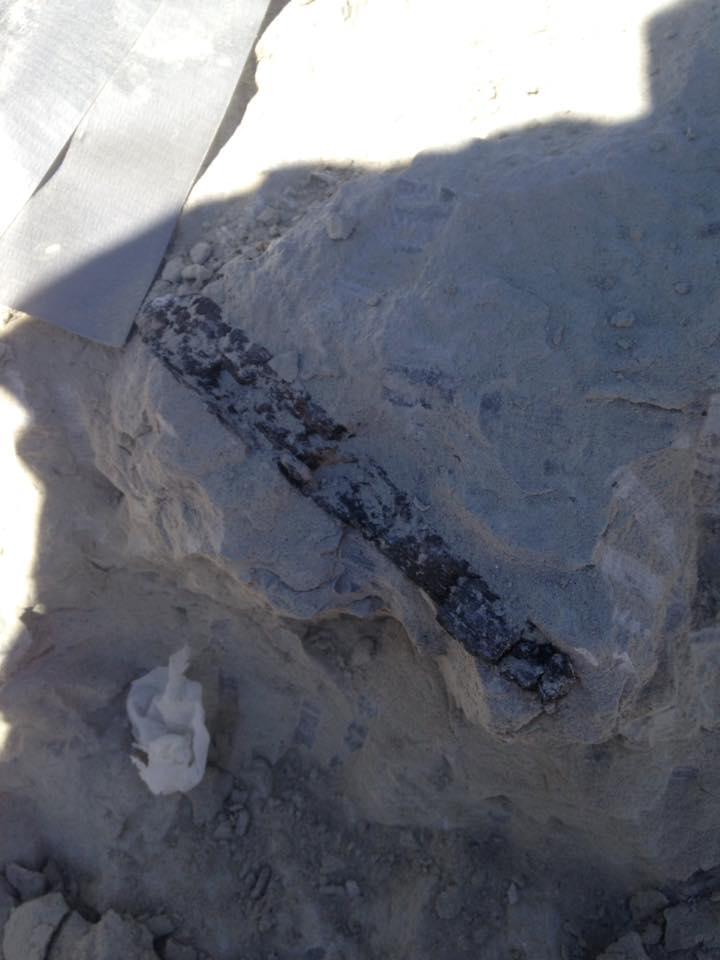
This is a picture of a completely different rib bone than the first two that I eventually had to sacrifice because Janet told me to – because it was falling apart and it was connected to the dorsal bone that they REALLY needed to uncover:
Once 6 pm came around, we fixed pancakes and eggs for dinner (my favorite – I’m a huge fan of breakfast for dinner), and I headed to bed around 8 since we had to get up early for the quarry again the next day.
At this point in the trip, I was starting to feel pretty nasty. I was sweating and getting covered in dirt during the day, my hair felt like chalk (and I constantly kept it in a bun), and my sleeping bag was starting to smell really nasty – all because I hadn’t showered in days.
I was enjoying my time in the desert, but the dry weather, extreme weather changes from 90 degrees during the day to freezing temperatures at night, were all really starting to get to me on top of not being able to shower. So…a lot of us were starting to get antsy.
But anyways, this is all I have for you today. I hope you enjoyed learning more about dinosaurs! I’ll post another entry shortly, but until then – I’ll catch you later!

 rissy stories
Leave a comment