Hey guys! So, I know I just finished up recording my Utah trip – but I also recently visited the “Falls of the Ohio” in Clarksville, Indiana, and I really wanted to add it onto my list of travel entries because it has a lot to do with geology, paleontology, and archaeology.
(There’s also a lot of human history that I’m not going to be going into detail about because I didn’t take that many notes/pictures on it – I was mostly focused on learning about the geology, paleontology, and archaeology aspect of the Falls.)
I would highly recommend that you go see this in person if you find this sort of thing interesting – it’s very neat!
*DISCLAIMER: Just to make this very clear: I’m not trying to plagiarize – all of my information/pictures on/of the Falls was taken directly from the Visitor Center museum/exhibit as well as the information boards across the state park itself. This is strictly a touristy-type blog entry (along with all of my other travel entries) and I’m simply just relaying things that I learned.
I was debating on posting this type of entry because I’m honestly not sure if posting pictures of the museum itself on this blog is actually okay. Obviously, if I’m eventually told that it’s not okay – then I’ll delete them immediately and just give you some of the information.
So, here we go:
My mother, aunt, grandfather, and I drove to the “Falls of the Ohio” this past Saturday, and we arrived around 12:30 in the afternoon. It was sunny and really hot, so the first thing that we did was get into the shade right next to the parking lot.
And in the shade, we saw two big piles of sediment right next to each other: one of them was labeled Waldron Shale from the Silurian Period (Geologic time) and the other was simply labeled as Dirt from the Devonian Period (Geologic time):


My aunt found the “Dirt” sign to be very amusing, so she took a picture of it and sent it to the rest of our family members so that they could “see what they were missing.”
But all jokes aside, they did miss a lot – we weren’t allowed to actually take fossils or rocks from the “Falls of the Ohio” area unless they were in these two piles. (This is simply because it’s a state park and if everyone took one or two fossils and/or rocks – they would eventually all disappear, and no one would be interested in visiting the “Falls of the Ohio” anymore.)
I found a bunch of pieces of shale, amethyst, calcite, and quartz in these two piles, and I also found one rock with a bunch of tiny shell fossils connected together:
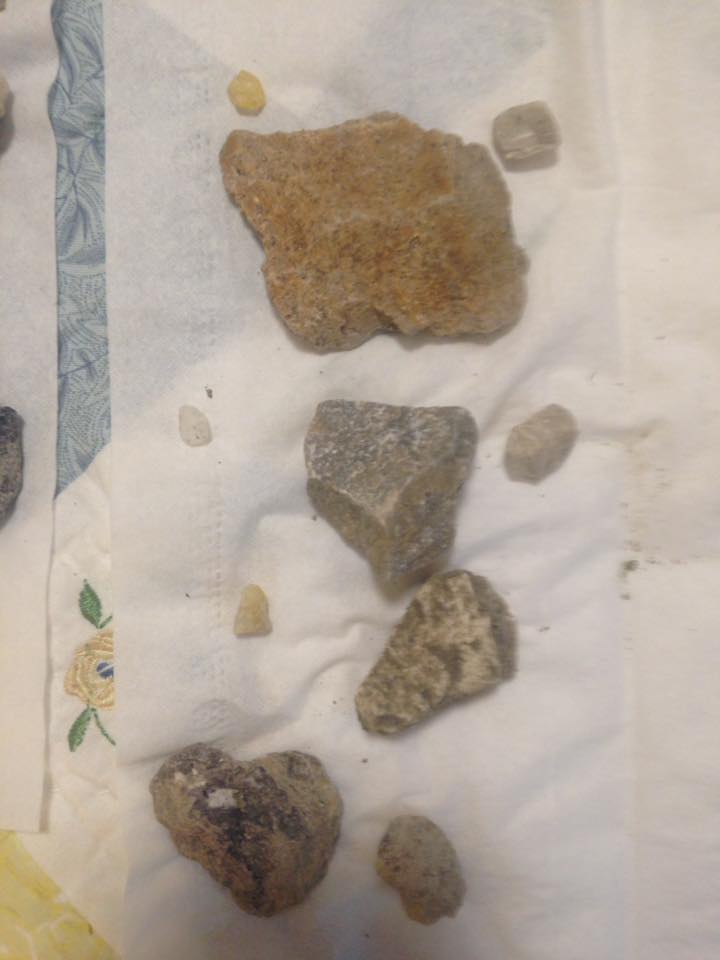
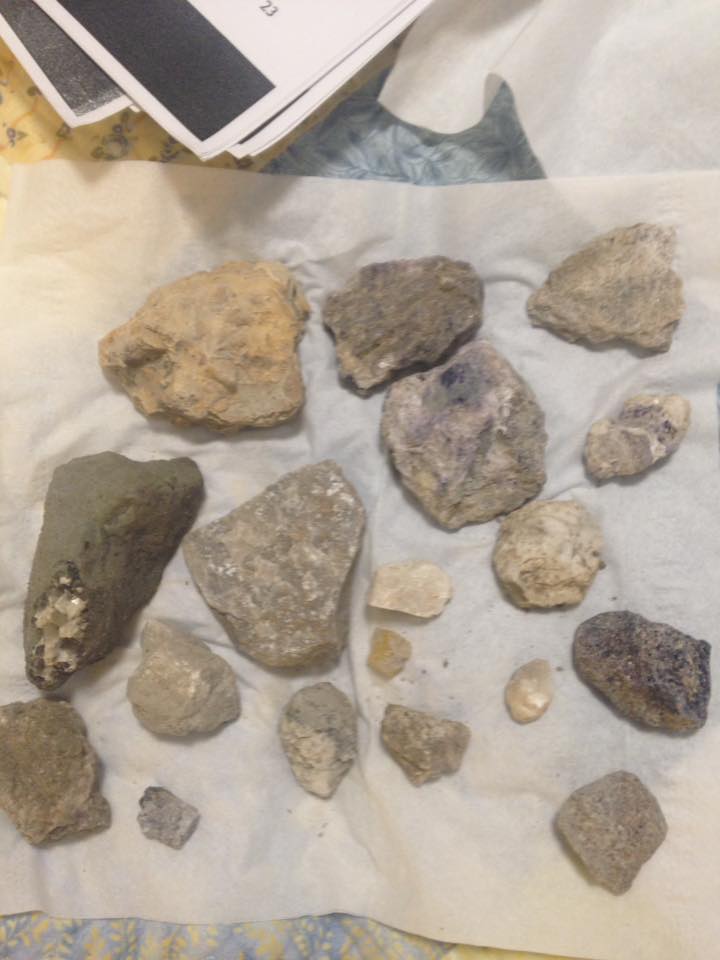

*The rocks that look dark purple-ish are rocks that have pieces of amethyst attached, and the small yellow/clear/square/rectangular ones are calcite. The flatter/gray-ish looking rocks are shale. Some of these rocks also sparkle in the sun, which means that they have some quartz crystals. And some of these other rocks were just cool-looking.
My mother, aunt, and grandfather were also asking me all kinds of questions about certain rocks that we would find while I was searching for my own rocks. I felt pretty satisfied about this because in Utah, I constantly felt like everyone else knew so much more about geology than I did – but now that I’m with my family (who are chemists, doctors, lawyers, engineers, teachers, etc. – NOT geologists.), they’re the ones asking me questions about geology. Which felt pretty good to be honest.
But once we were done with all of that, we started to make our way up to the Visitor’s Center when we came across a bunch of boulders lined up on a hill that had fossils in them. (I’m eventually going to get into what these fossils are in a moment.):


And here’s what the state park looked like from this hill (it was very pretty):


This body of water is the Ohio River:
That long line out in the distance is a dam: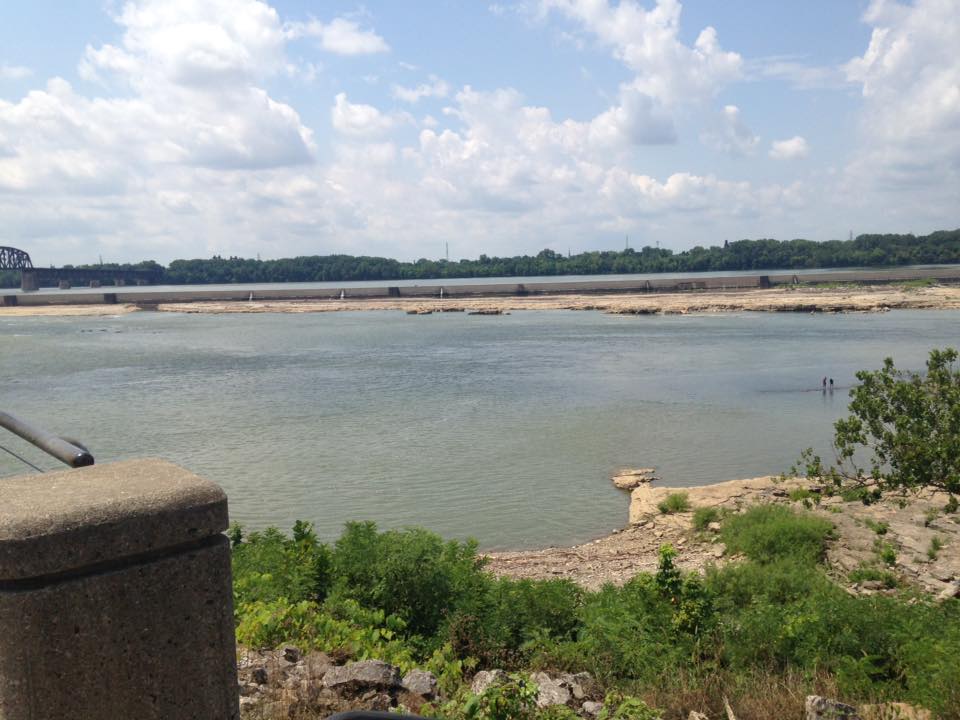
And these two people standing out in the water like that actually were not supposed to be standing out in the water like that lol. The current is pretty strong, and there were multiple signs stating that we weren’t allowed to go into the water for that specific reason: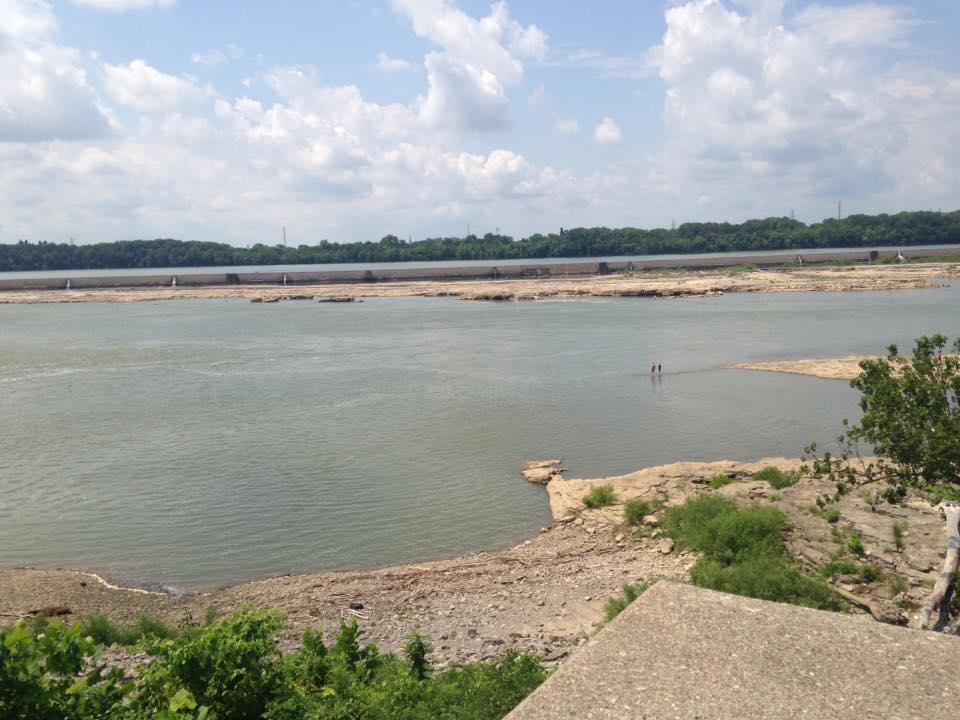
The buildings behind this bridge/dam reside in downtown Louisville, Kentucky. We were literally right on the boarder-line between Indiana and Kentucky: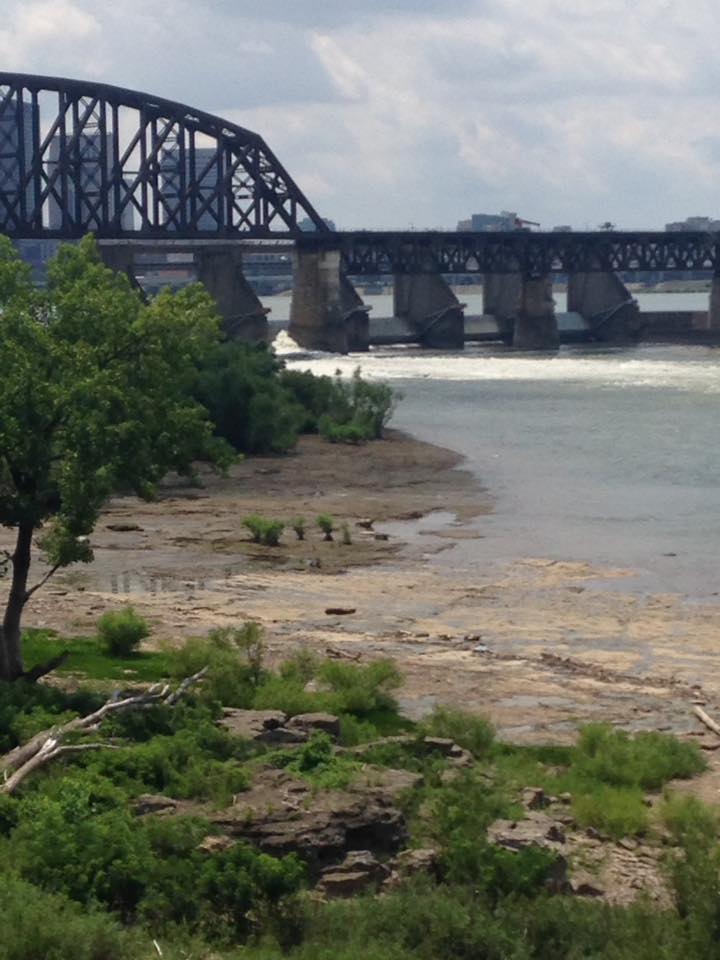
The person in this picture is my grandfather: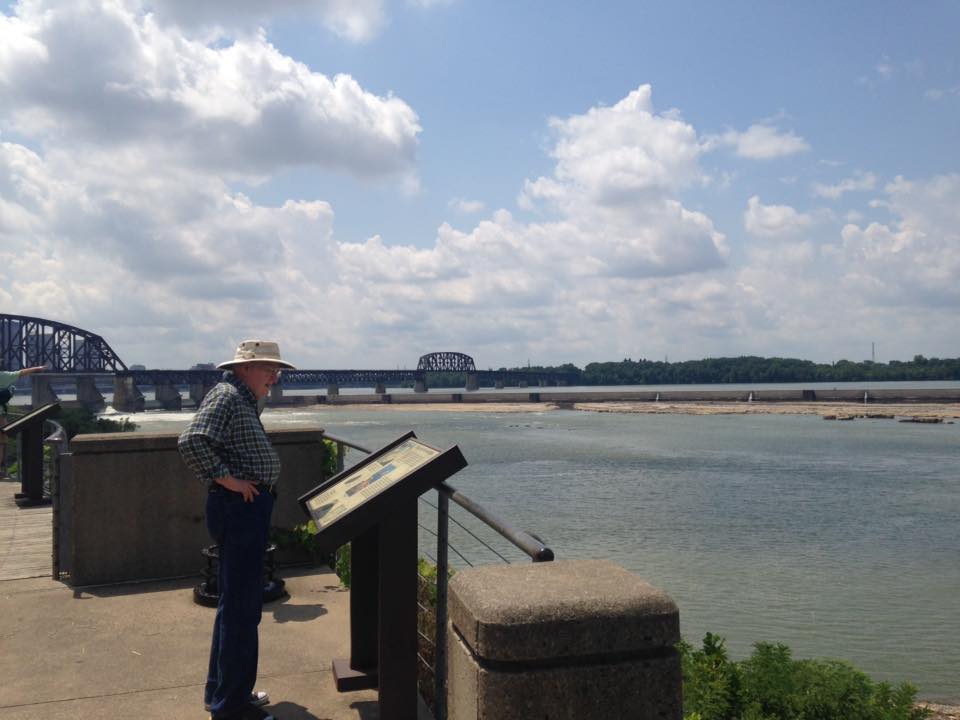
Aaaaand here’s two pictures of cool-looking pieces of wood, because why not?:


There were also information boards for us to look at as we admired the view (If you’re interested in this sort of thing):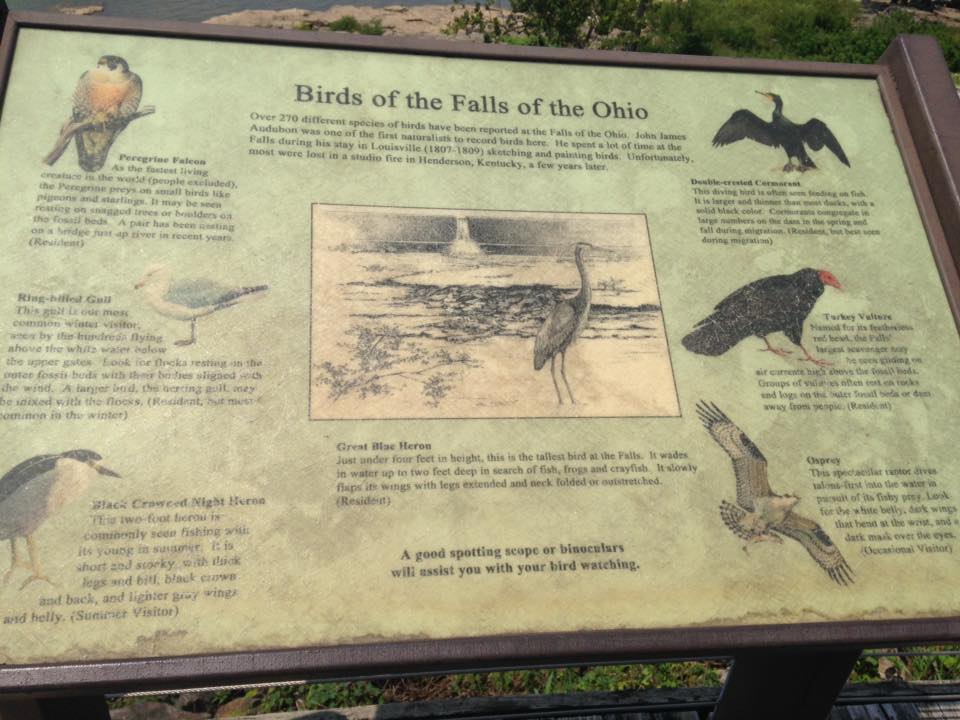
We actually saw a Turkey Vulture by the way: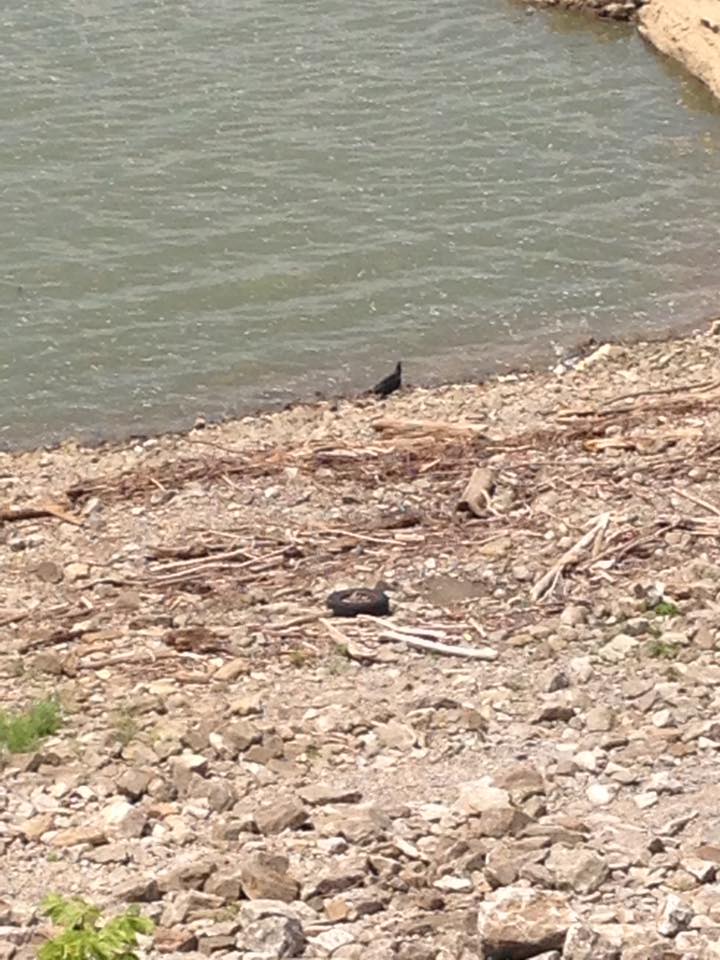
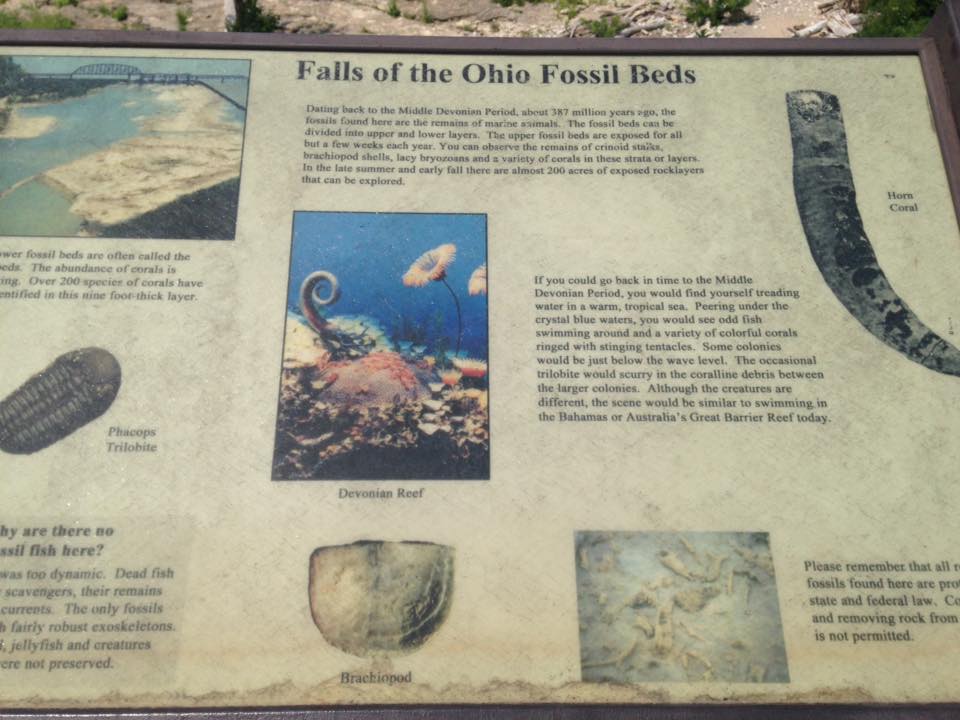

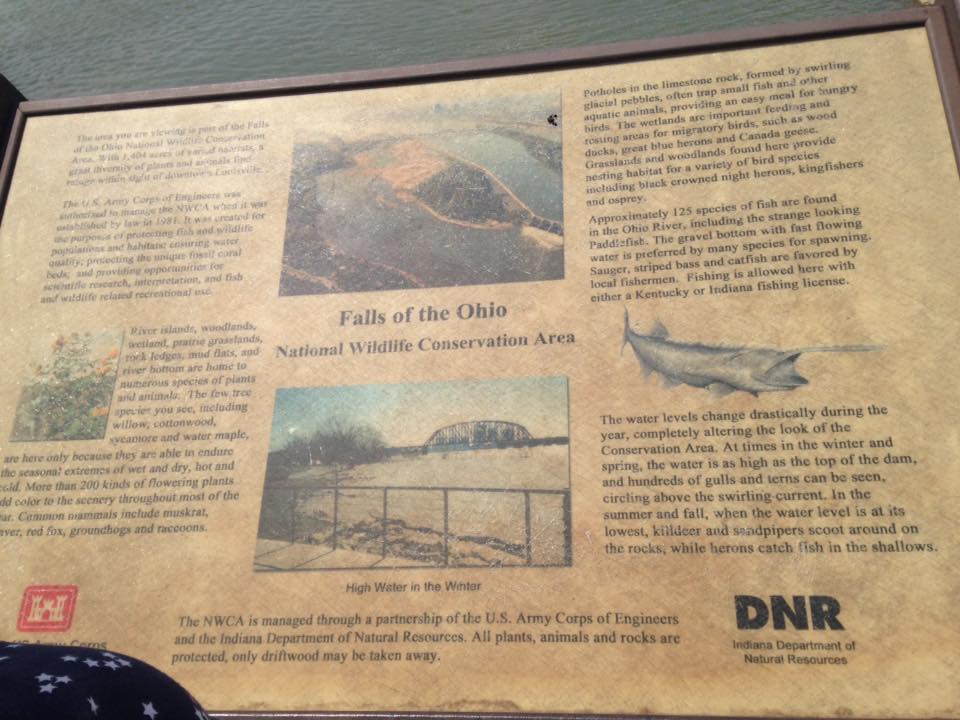
And after we were done admiring the view – we FINALLY went inside the Visitor’s Center. One of the first things we saw was another boulder with fossils: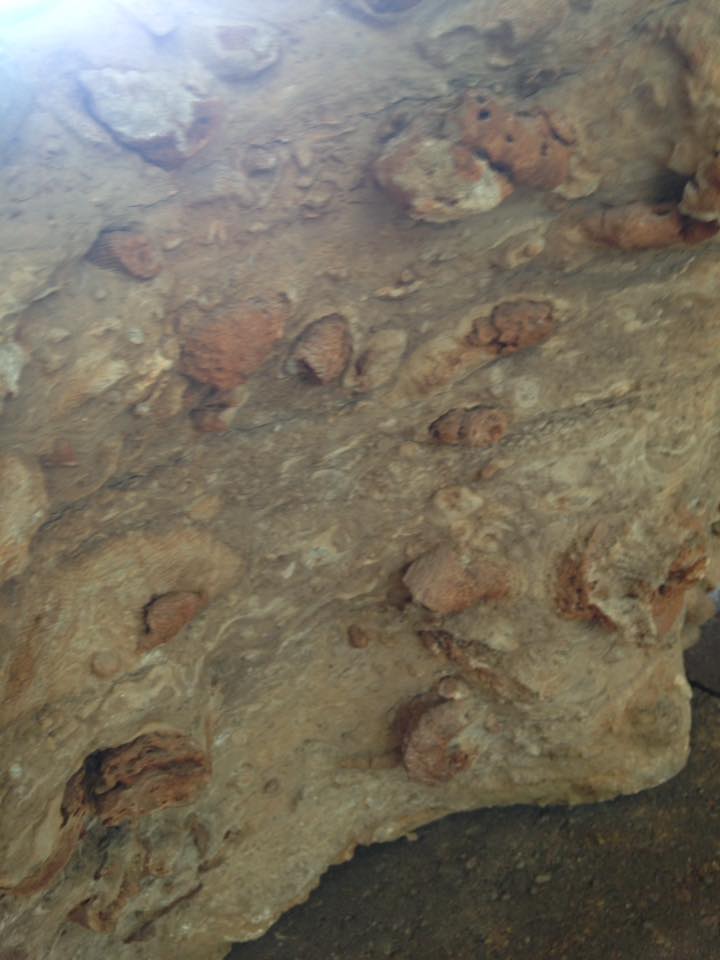

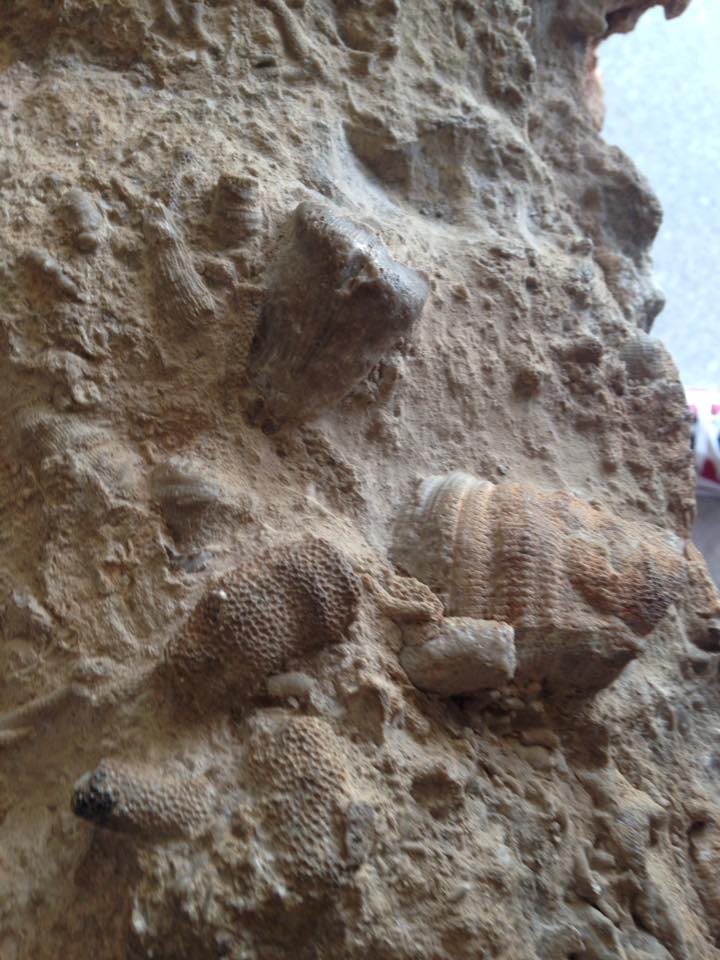
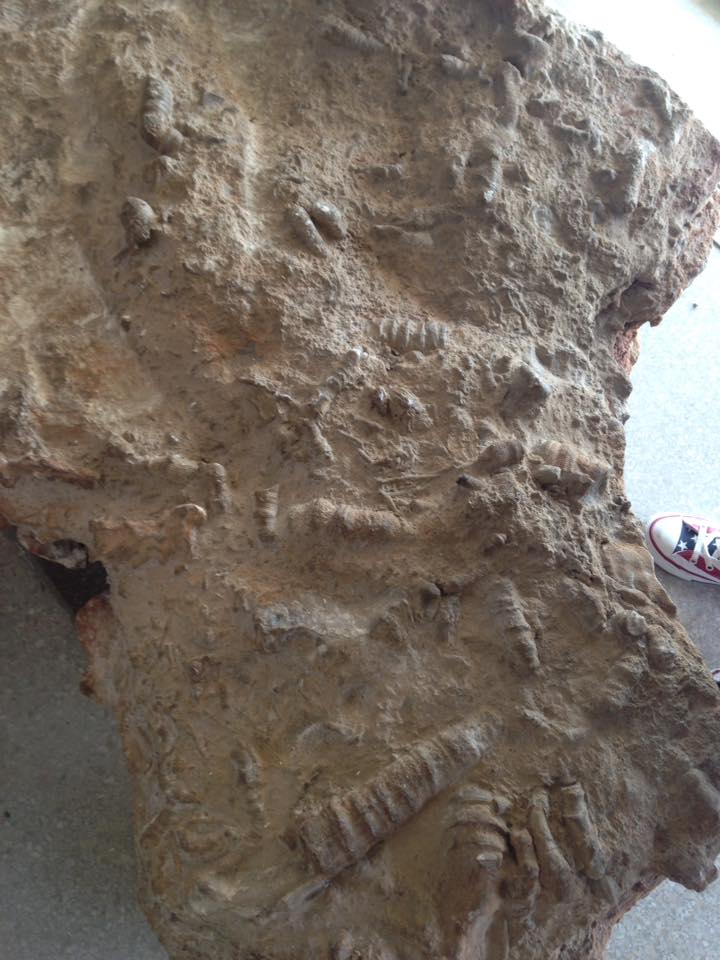
And here’s what the inside looked like: This is the skeleton of a mammoth (They used to roam around the Falls, but this specific one was found in Utah – go figure) and the red-haired person in this picture is my aunt: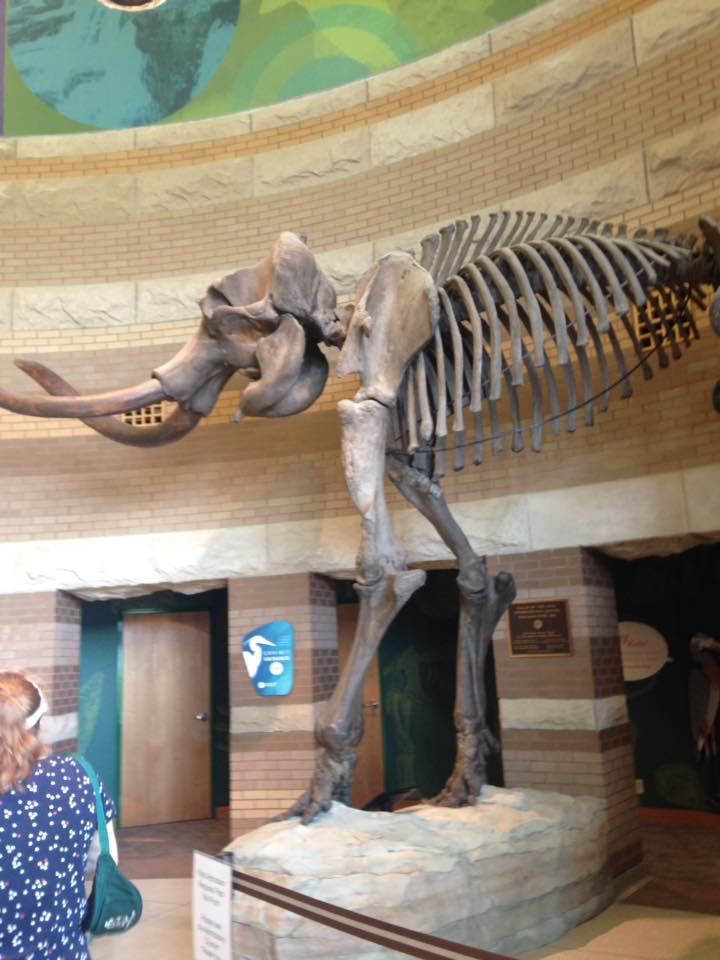
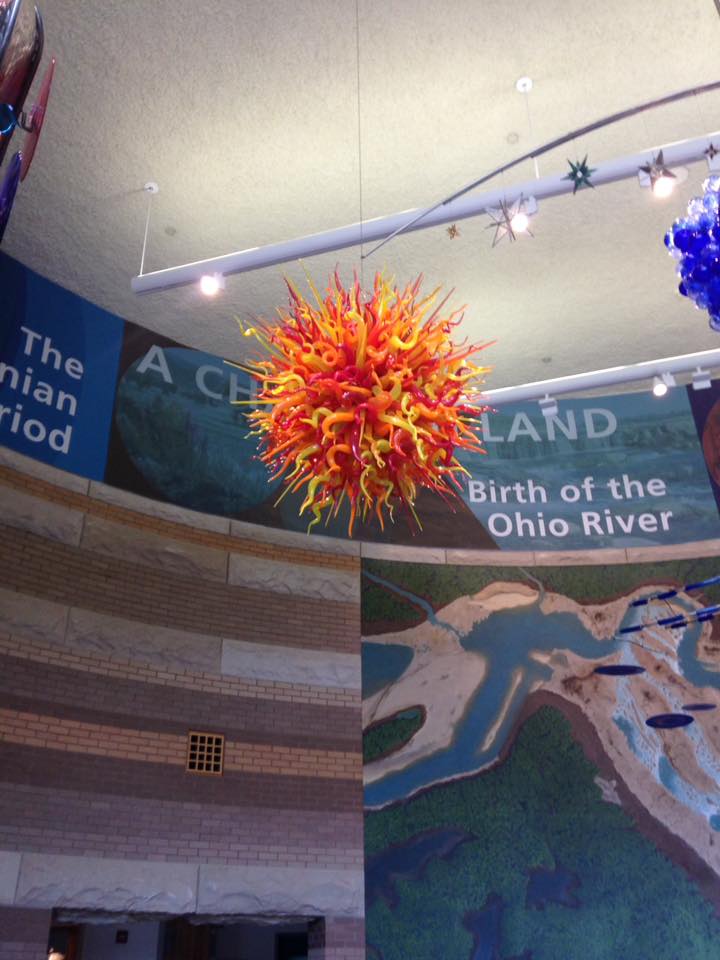

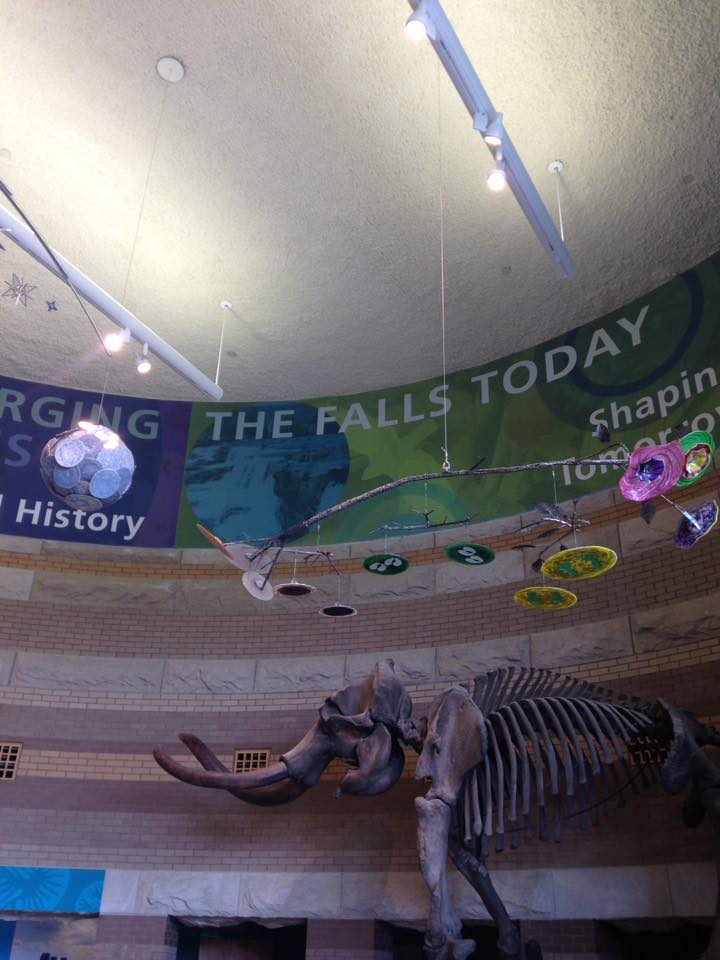
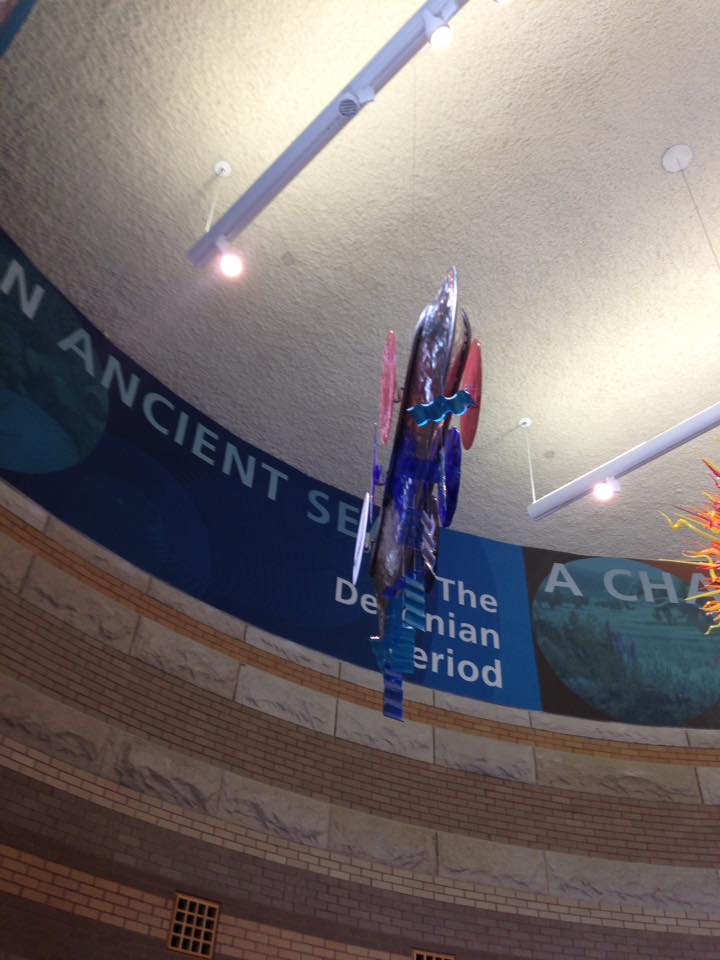
We went into the gift shop first and looked around – I bought animal crackers because I was starving – and then we went into the exhibit to watch a short film on the geological history of the area. (Unfortunately, I didn’t think to take notes on it, so I don’t really remember everything that was stated – but, the museum that we went through afterwards dove into even more detail.)
I’m going to give you the information that I took pictures of and notes on in the same manner in which I found it. So, it’ll be like you went on the tour with me. (This all comes from the “Falls of the Ohio” Visitor Center Museum):
-Now, the Devonian Period (Also known as: “The age of the fish”) is the key time period here: 390 million years ago, when the “Falls” was underwater.
-“None of today’s plant and animal species were living,” and “North America did not exist.”
-“Creatures of the Devonian flourished because it was very warm, (between 70-80 degrees Fahrenheit all year long).”
So, what happened to all those creatures? Well, they eventually died, became extinct, and turned into fossils: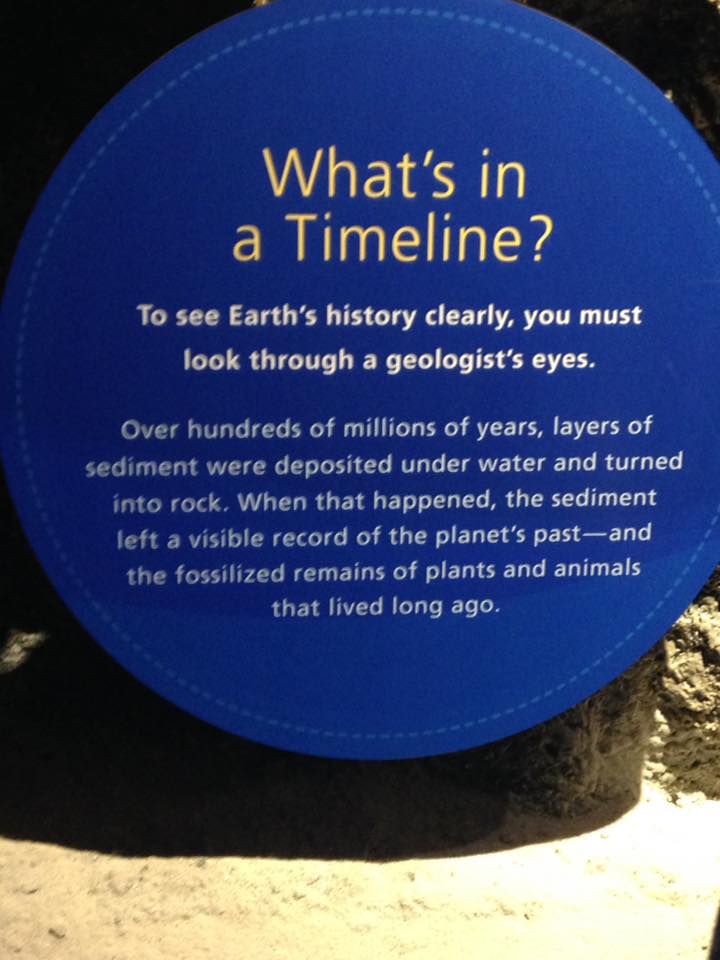
Here are some of the fossils that are concentrated in the “Falls of the Ohio”:
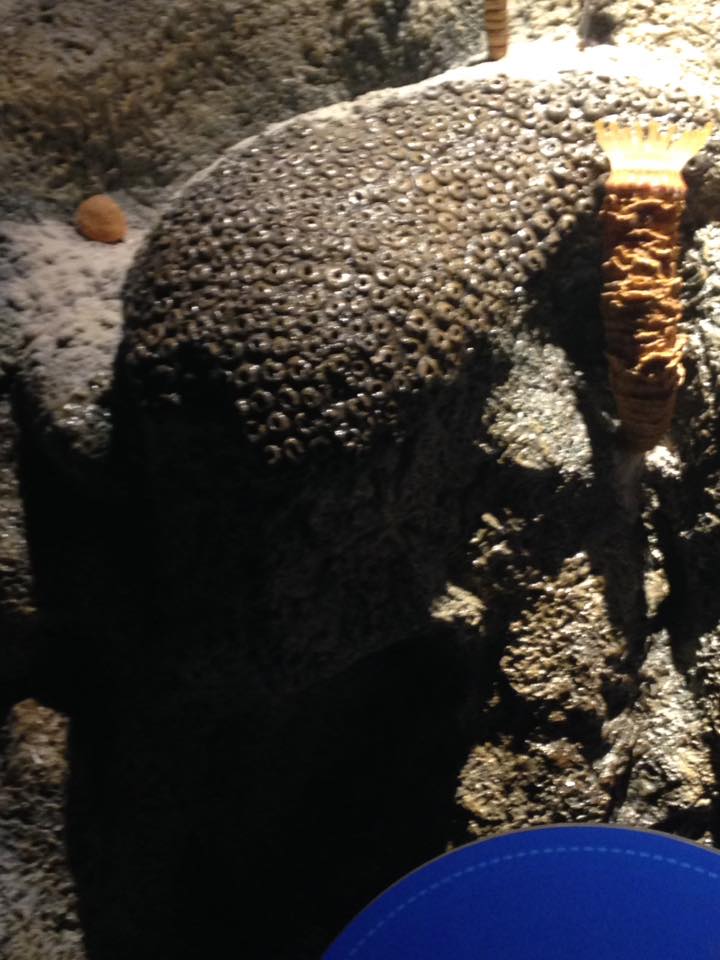
- Honeycomb Coral – it looks like a wasp nest, and it was “made up of tiny individual animals, making it like an undersea apartment building for corals.”
- Bivalves – (clams)
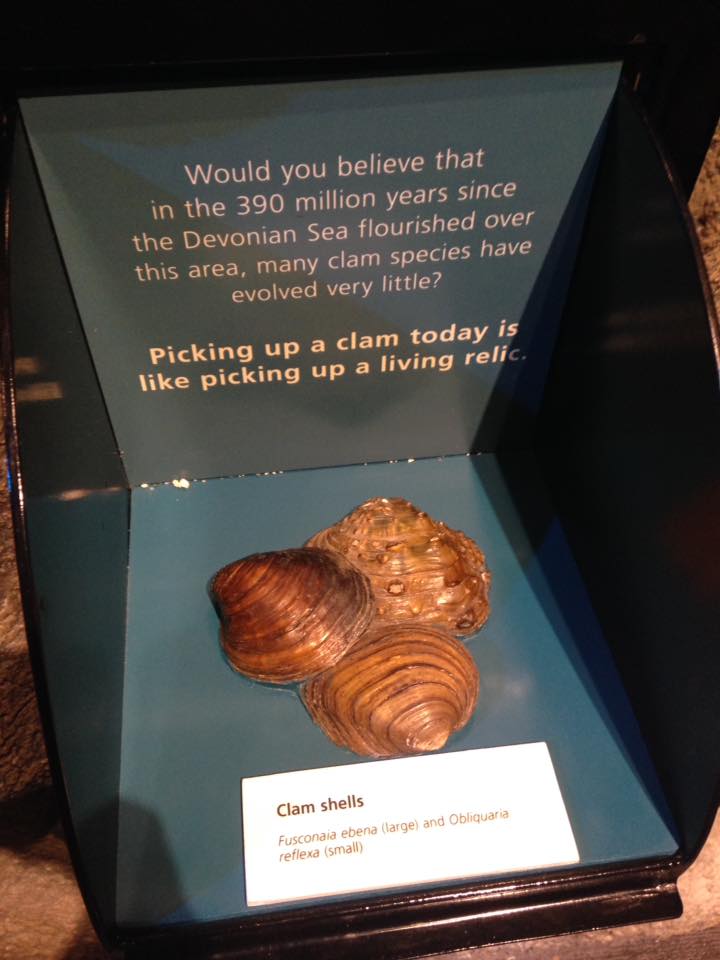
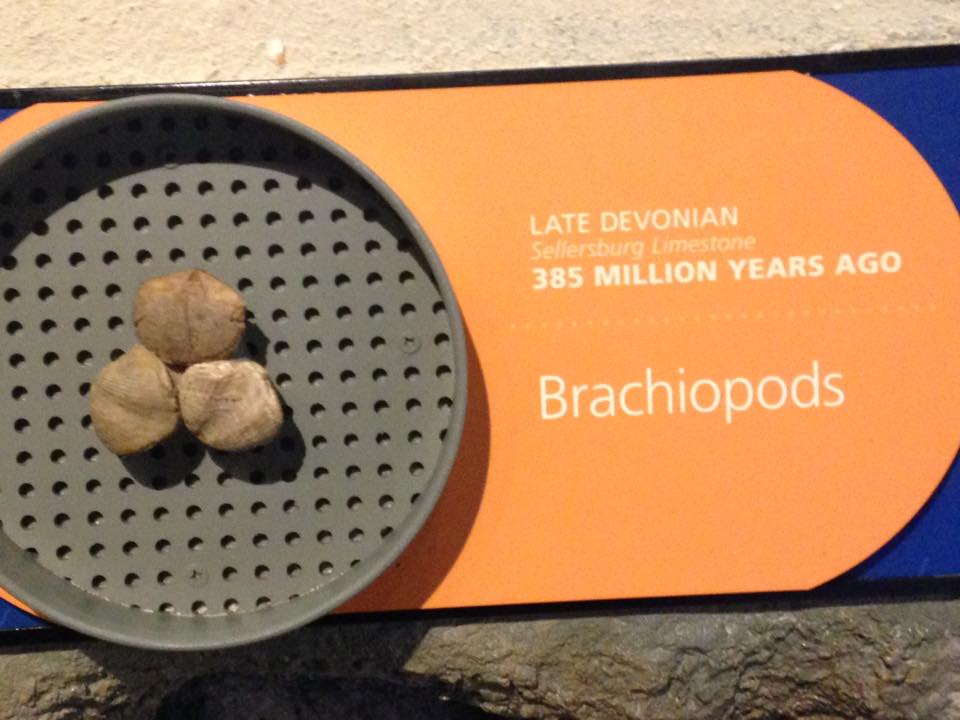
- Brachiopods: They “fed by resting on the sea floor and pulling plankton into their shells.”
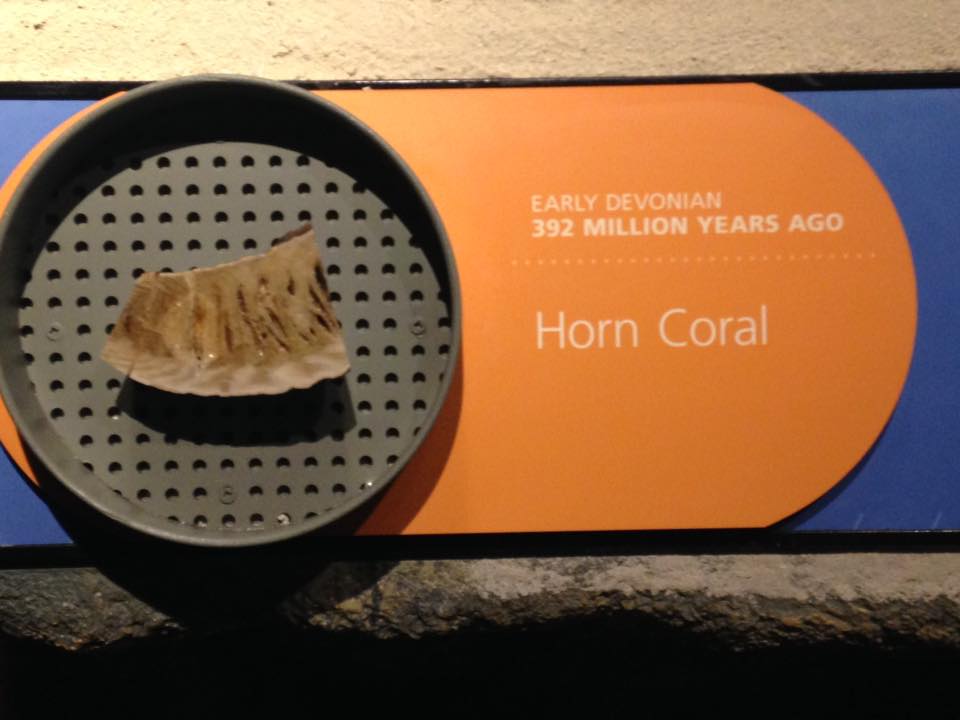
- Horn Coral: May have had “stinging cells to stun prey and capture it with tentacles.”
- Trilobites – They were on the ocean floor and they had “bug eyes,” which helped them in regards to predators. And if they found one, they would ball up and roll around the sand or bury themselves in the sand. They “ate nutrients from algae and organic debris in the sediment.” (“It is believed by some that they were the first animals that could see in color.”)
- Blastoids – They look like “flower buds with a narrow stem” and “they trapped plankton” (“They’re also really hard to find.”):

- Gastropods: (Snails)
- Crinoids: They are related to starfish and are sometimes called “sea lilies.” “They look like underwater flowers,” but as fossils, “their stalks resemble bolts or rings.” They also “captured microscopic plankton.”
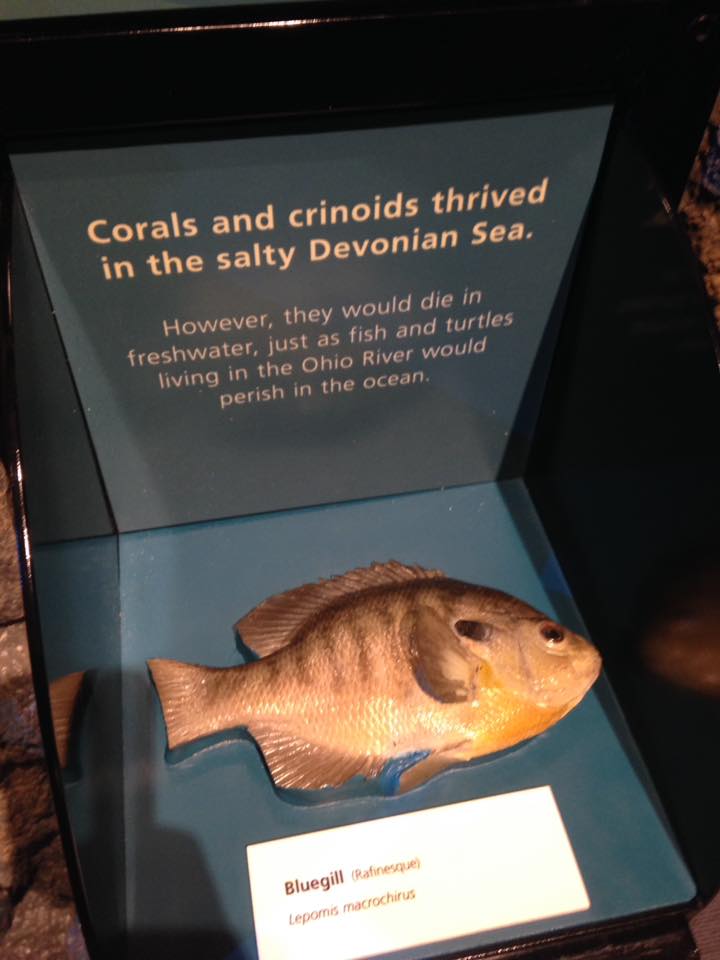
- Cephalopods: “Squid-like creatures with shells.” “They were dominant predators for fish – they had tentacles.” “And their shells are cone-shaped.” They could “grab and hold onto prey – like trilobites and snails.”
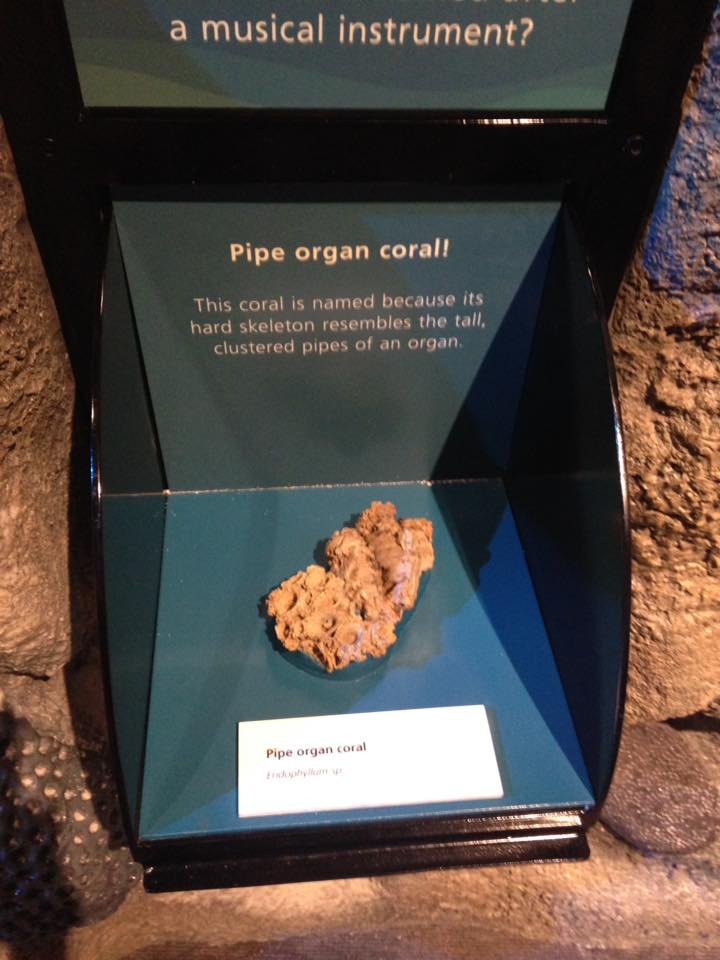
- Pipe Organ Coral:
–While a lot of fish lived in the Devonian, “they are uncommon fossils.”
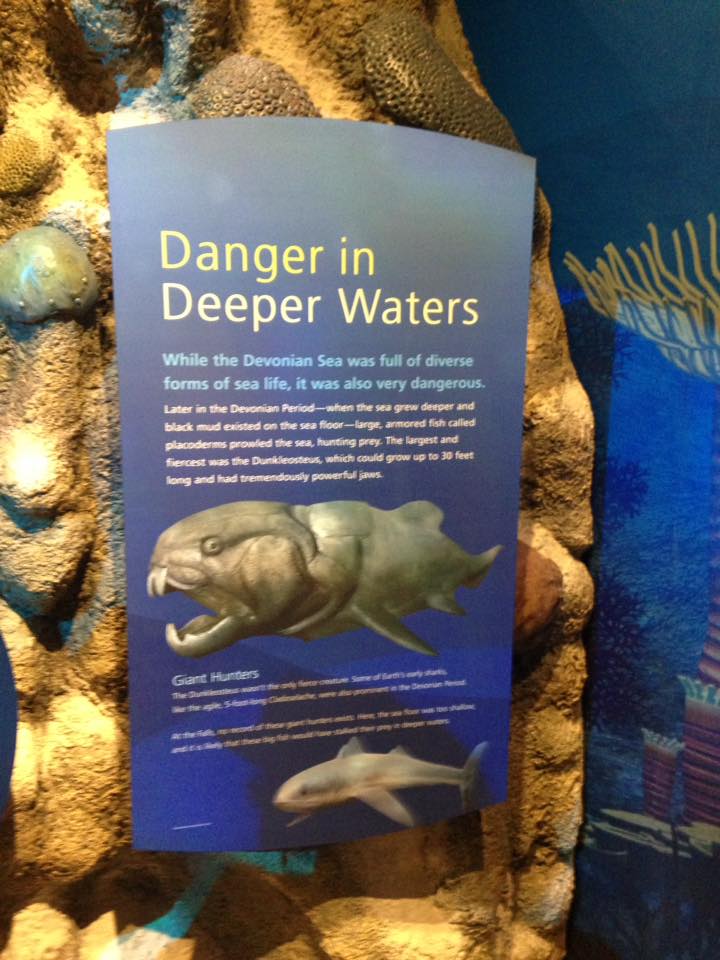
-Speaking of – “there were a lot of dangerous fish in the Devonian Sea, like the Dunkleosteus, which was a 30 feet (maximum) placoderm with really strong jaws.”
Now, there are plenty more, but these were the most common ones. And while we were walking around and learning about the Devonian – we came across a little station where you could hold a piece of paper to a rubbing plate and then color in the paper with a crayon. It turned out like this: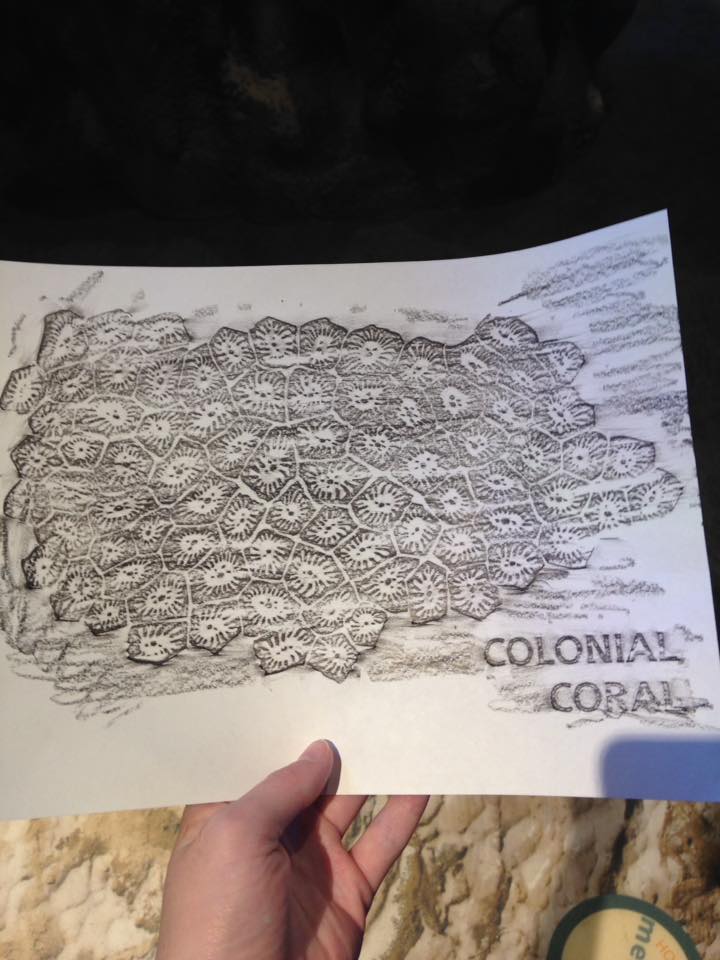
There was one for colonial coral and there was another one for trilobites. We spent a lot of time here because I drew one for myself and then everyone decided to draw one for my other younger cousin who would be interested in stuff like this.
Then we continued to walk around:


So…after learning about all of the different types of animals that lived in the Devonian Sea…you might be wondering what ever happened to the Devonian Sea itself:
-During “the Middle Devonian, environmental conditions at the “Falls” changed.” The Earth’s crust uplifted and it caused the sea “to become isolated and stagnant.” In other words, “oxygen could no longer freely reach the ocean floor – which caused a wide variety of life forms to die.”
–Plate tectonics caused the crust to uplift and move – “Earth’s outermost layer, the lithosphere, is made up of 14 plates and Earth’s continents are connected to those plates, twisting and changing shape as the plates slowly move around the globe.” “This can create ocean basins and mountain ranges.”
-(taken directly from an information board in the exhibit): “Extinction is a natural process that allows new species to thrive” – and “four major extinctions occurred during the Devonian.”
-(taken directly from an information board in the exhibit): “For 25 million years, clay sediments from mountains to the east covered the sea floor. Microscopic algae, once dead, settled to the bottom, creating a black muck that eventually hardened and became New Albany Shale.”
And here are some more pictures of types of fossils found in this area and the time period in which they are from:


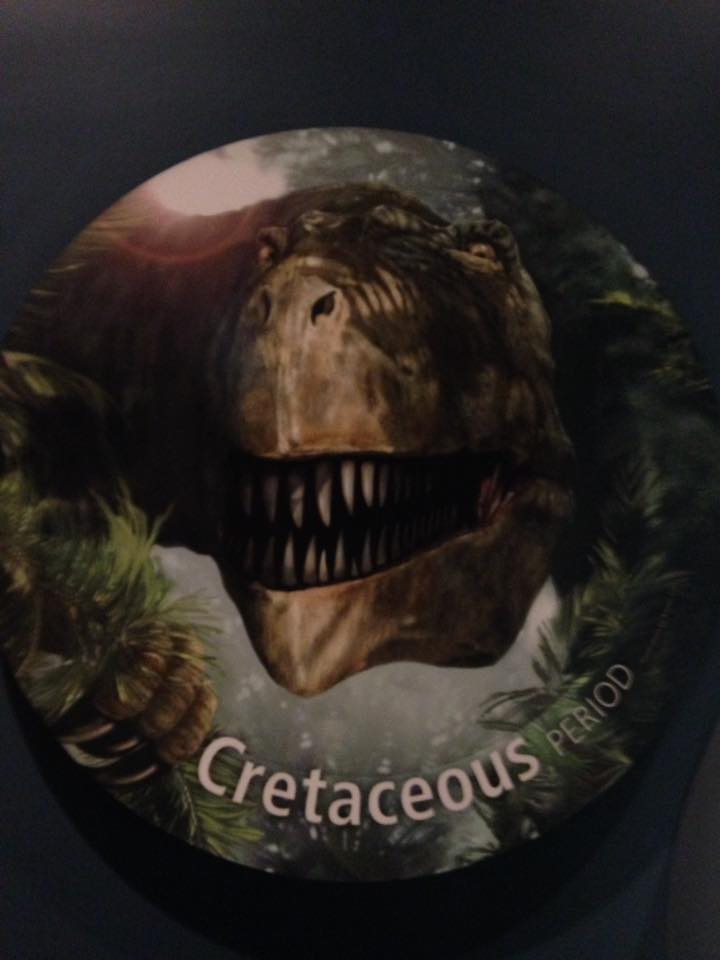
Aaaaand here’s a picture of a smiling dinosaur, because why not?
Now we’re going to move into the Pleistocene Epoch (2.6-11,700 years ago). – The Last Major Ice Age.
–Global temperatures dropped dramatically in the beginning of this epoch, so glaciers began to form – which shaped the “Falls” region.
-(taken directly from the information board at the exhibit):”Glaciers are huge, slow-moving bodies of ice that form on land. Pleistocene glaciers on the North American continent were at their thickest in Canada – about two miles high. By the time they reached central Indiana, however, they were roughly 500 feet thick.”
-Their immense weight flows “slowly across the landscape with help from the water running beneath them.”
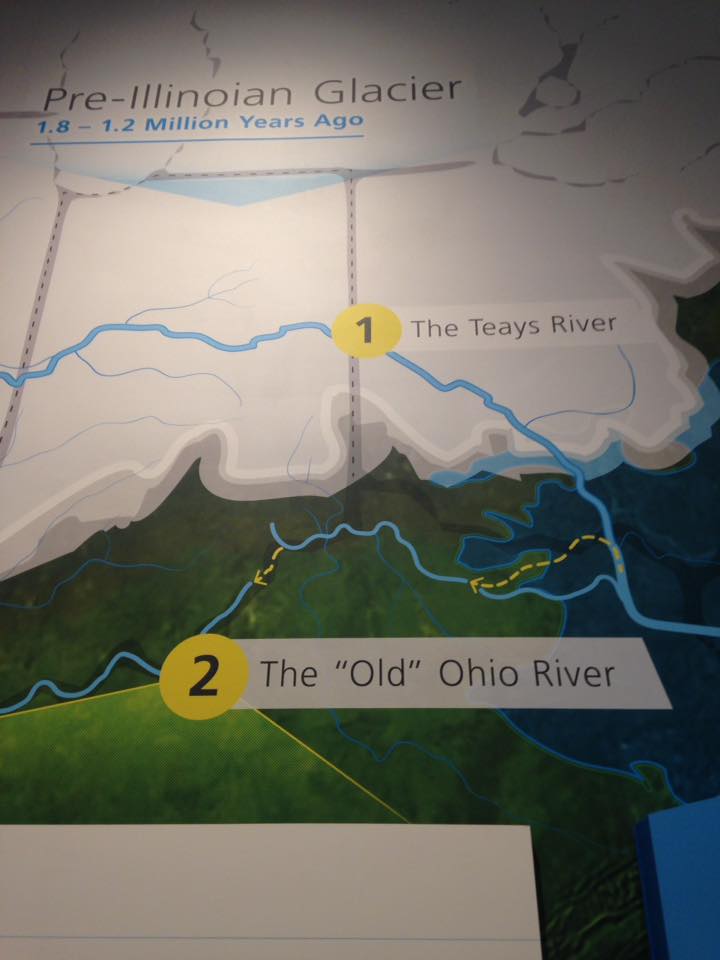
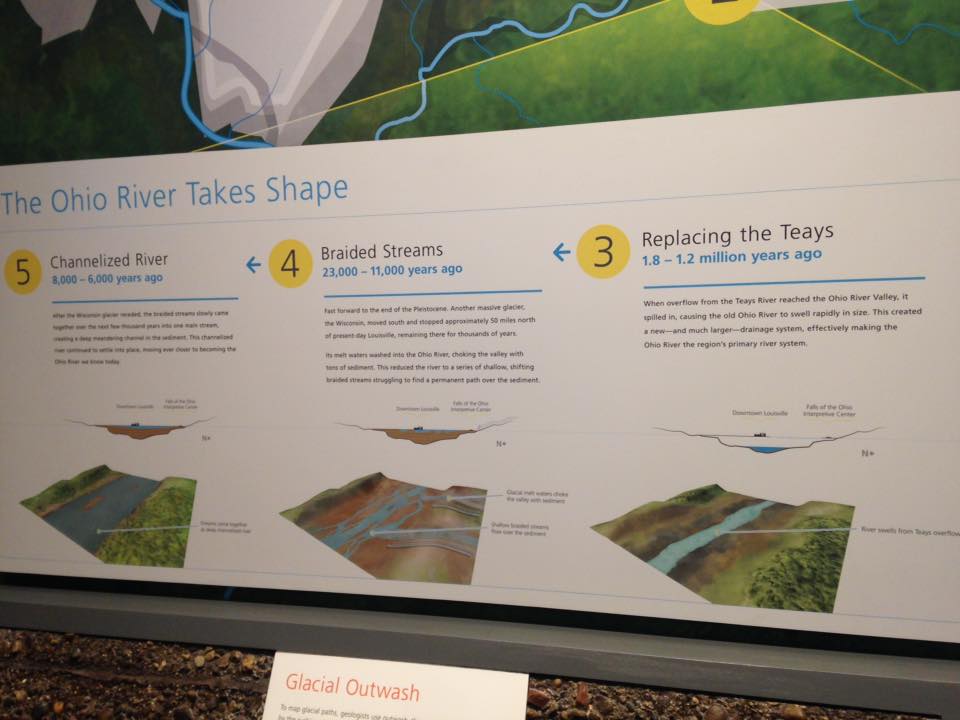
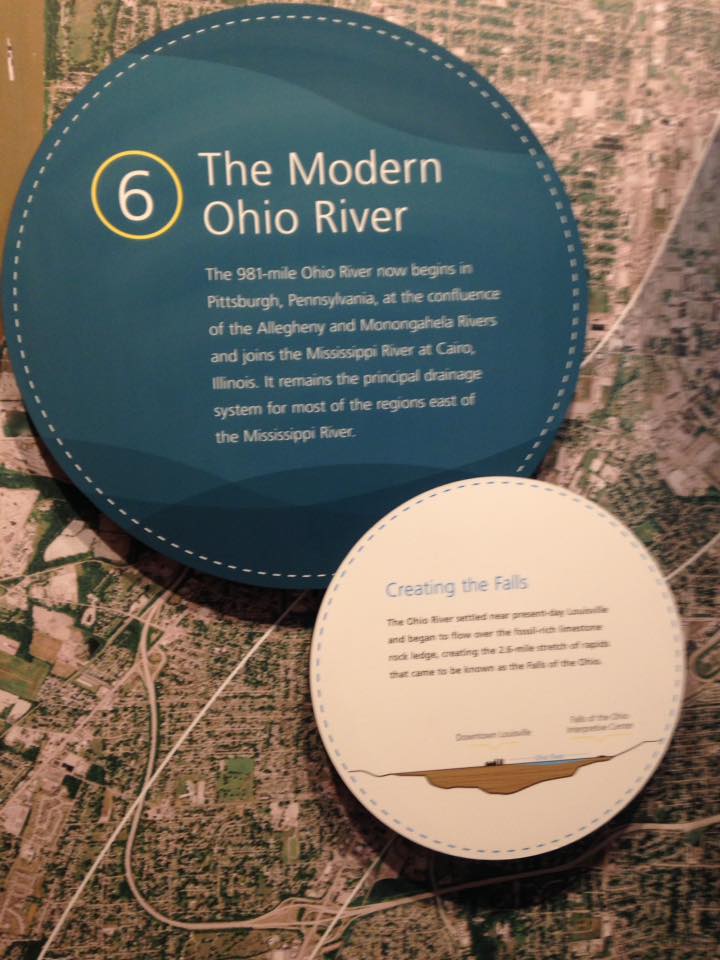
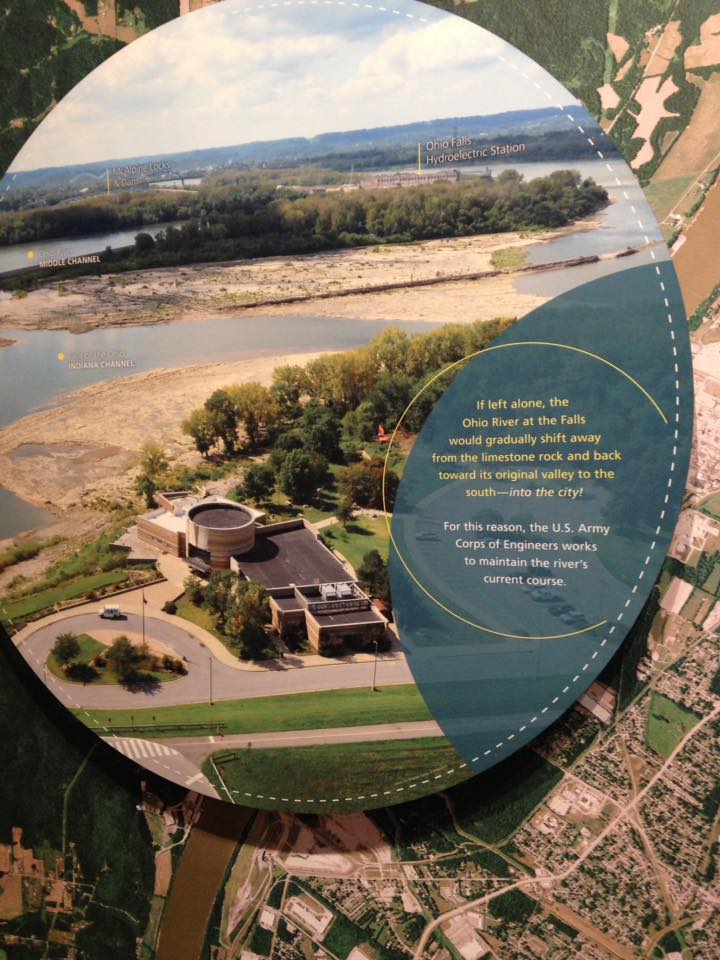
-There used to be a Teays River and “Old” Ohio River before the ”Pre-Illinoian” glacier transformed the landscape the way that it is today.
-The Teays River “flowed northwest through Ohio, Indiana, and Illinois.”
-The “Old” Ohio River “flowed along the same course as the river we know today, with headwaters beginning near Madison, Indiana.
-However, the glacier “descended far into North America, blocking the Teays River. With no path left to flow, the river’s waters began to fill the valley (Ohio Valley), spilling over into nearby basins and flooding the region.”
-Mammoths, Mastodons, Buffalo, and Bison were common in this area at one point as well:
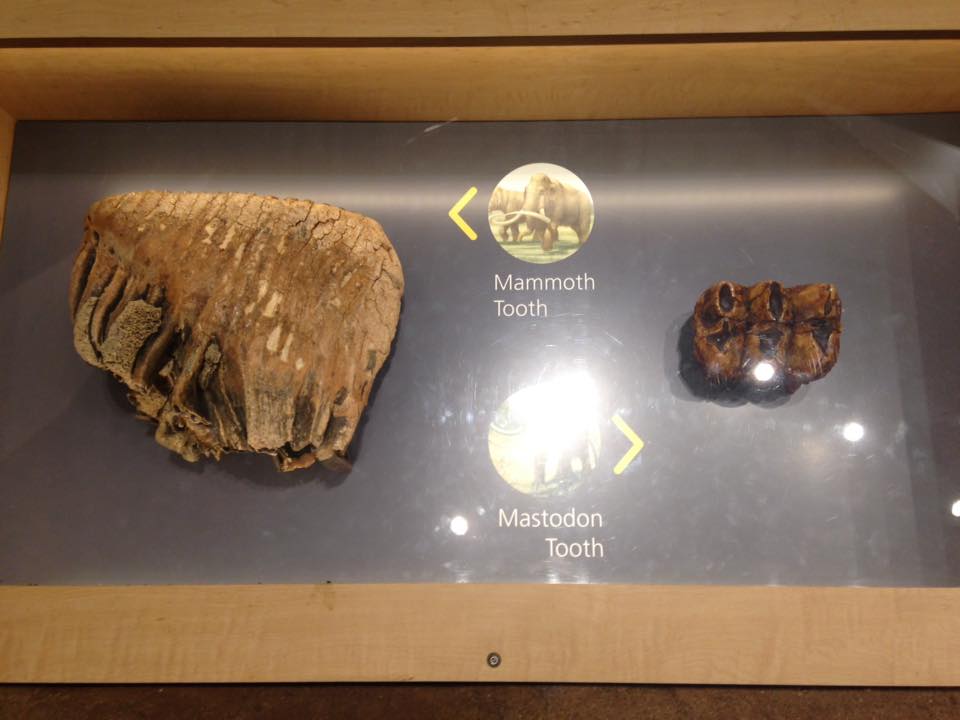
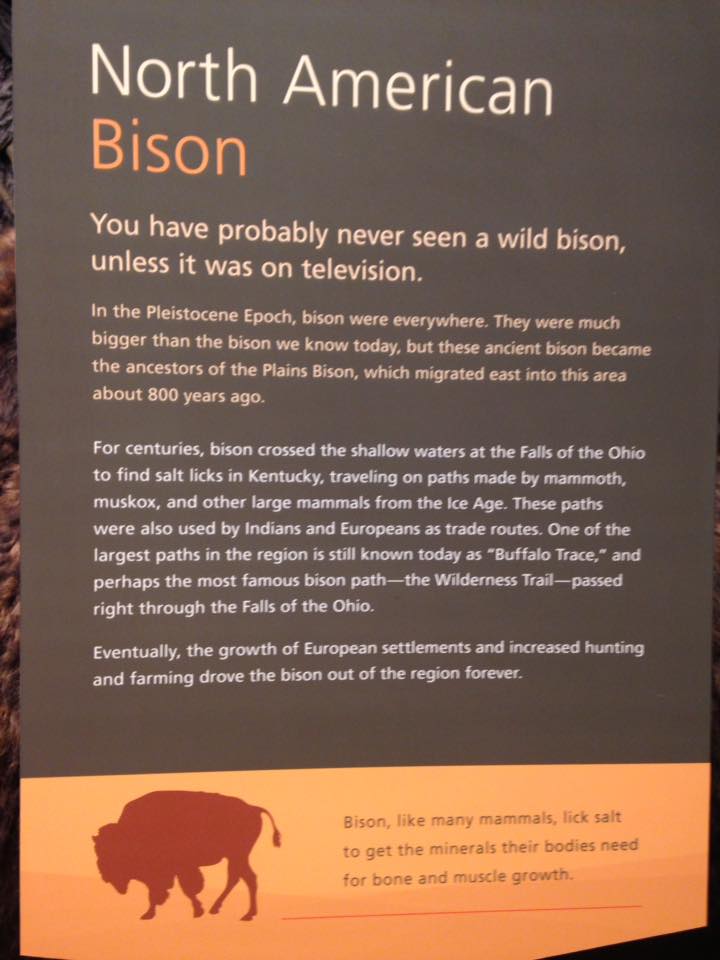
As I mentioned at the beginning, there’s also a lot of information on the history of humans (Native Americans, Lewis Clark, etc.) in this area, but I won’t get too far into that because I was mostly interested in focusing on the geology aspect of it. In other words, I didn’t take a lot of notes or pictures on that part of the museum because I wasn’t as interested in it. (If you want to learn more about it – visit! 🙂 )
This is mostly what the ecosystem of this region consists of today:
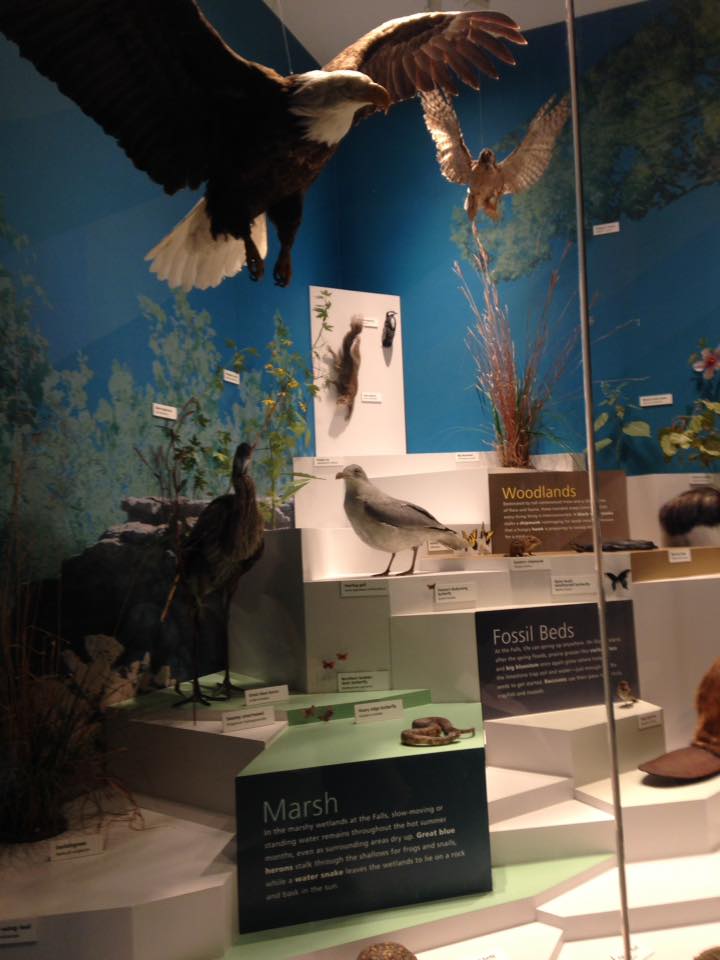
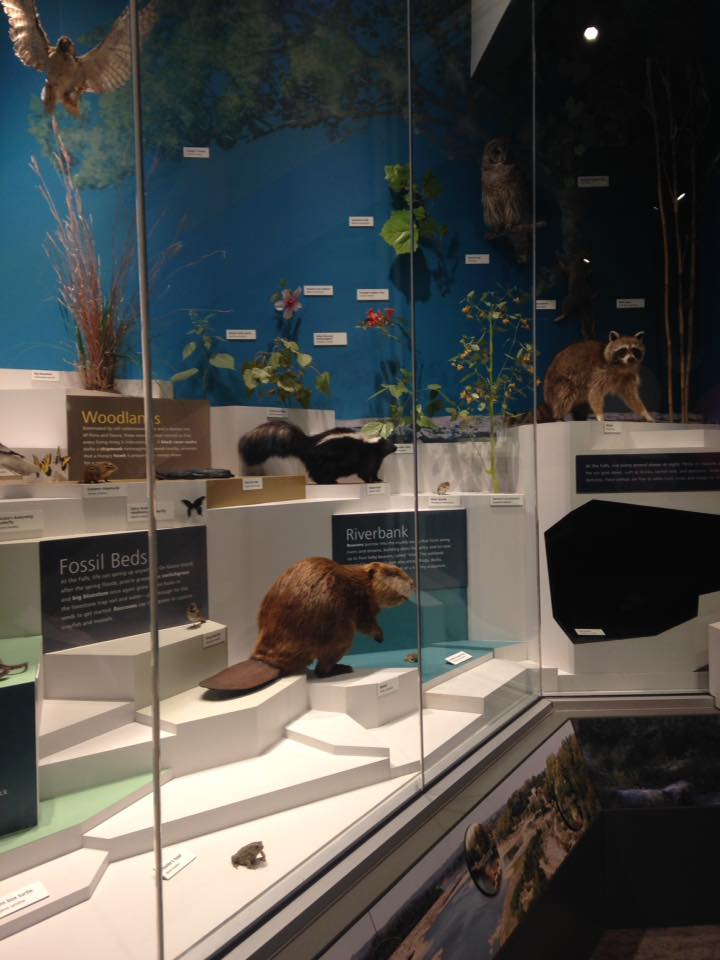
My aunt really likes opossums. That’s kind of why I took a solo picture of it – she was really interested in this lol: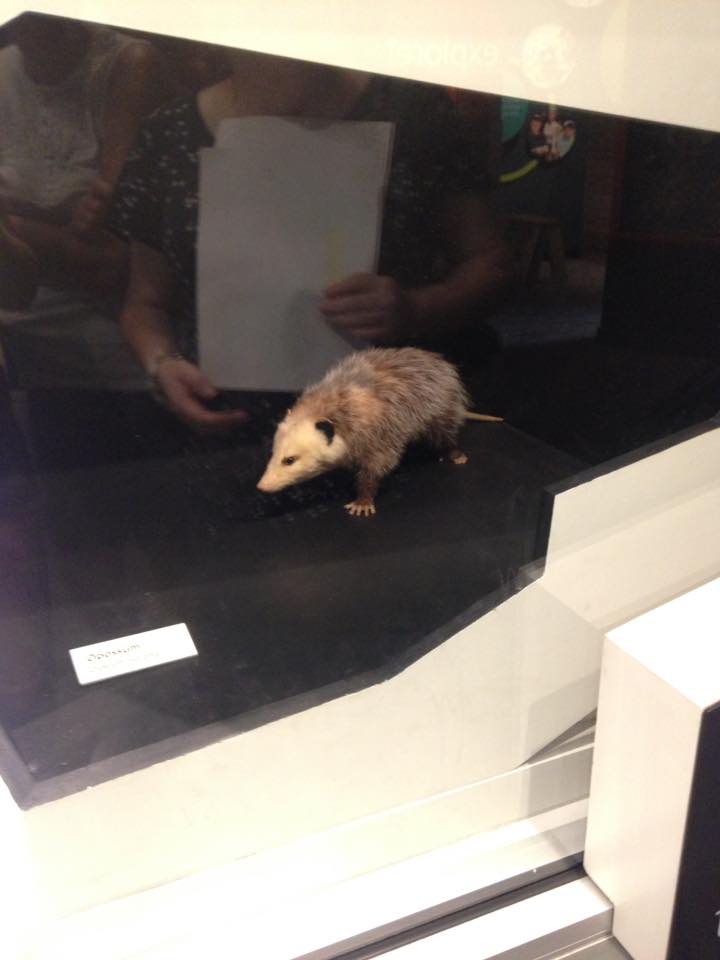
So, now we’re FINALLY done with the information part of the blog – it’s officially time to show you the pictures that we took when we were actually outside on the fossil beds.
But first…it was raining after we got out of the museum. So we had to wait around for a half hour or so for the rain to stop before we went out there. In the meantime, I pulled out my book (yes I brought a book with me – shush) and read. Sharp Objects by Gillian Flynn – I’m not gonna go into a short book review, but I’m about halfway through it and its really good so far, so I recommend reading it!


However, once it stopped raining, we went outside and everything looked so much different. Like this boring piece of wood for instance: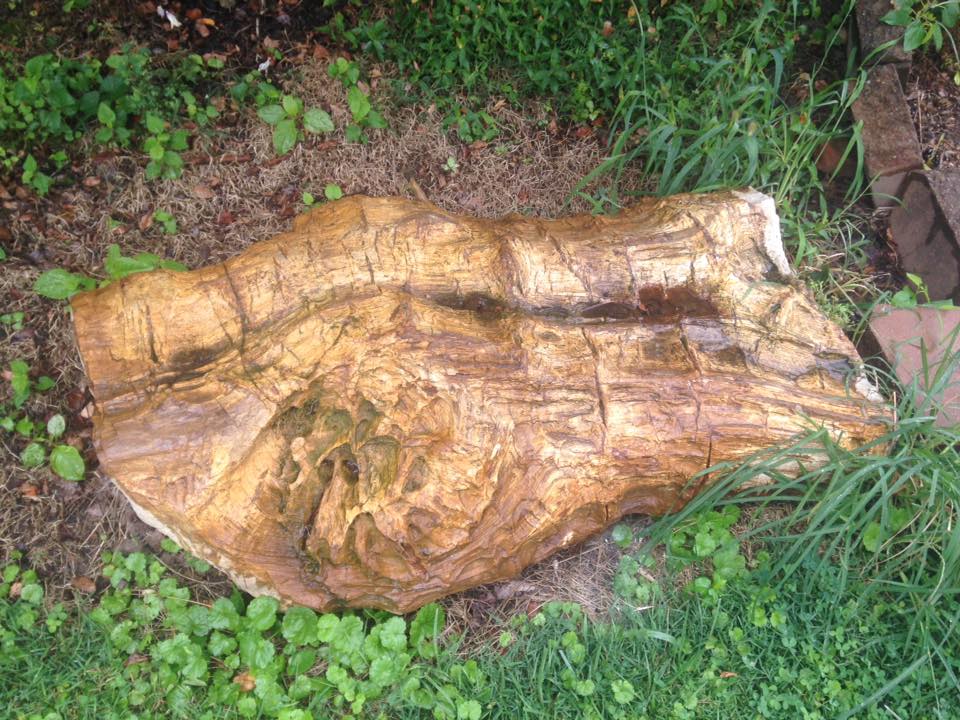
And it was honestly for the best because it cooled off (a lot) and it was a little easier to see the fossils.
Now, here are some pictures of fossils/rocks that I found. I will attempt to identify as much as I can, but obviously, I’m not an expert.
Fossils That I Think I Can Identify:
Bivalves and/or Brachiopods? (Some of them just look like shells.):


Crinoids:


Horn Coral? (Or some type of coral):


The end of a Horn Coral?:


Colonial and/or Honeycomb Coral?:


This looks like it could be part of Syringopora Coral or it could be part of a Horn Coral – I’m not sure.: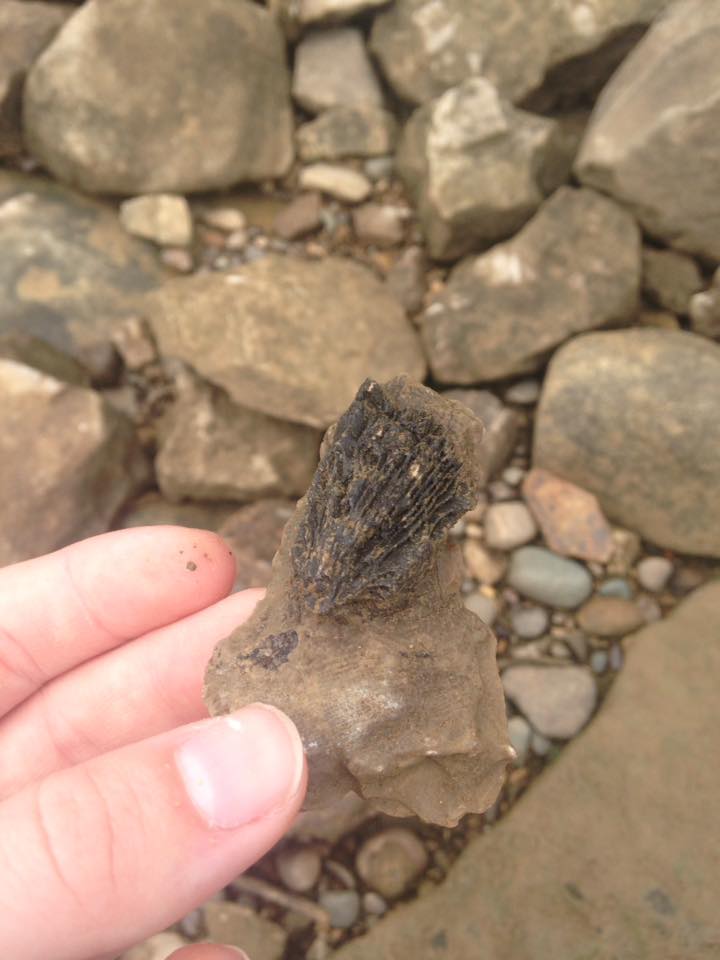
Looks like Scleractinian Coral.: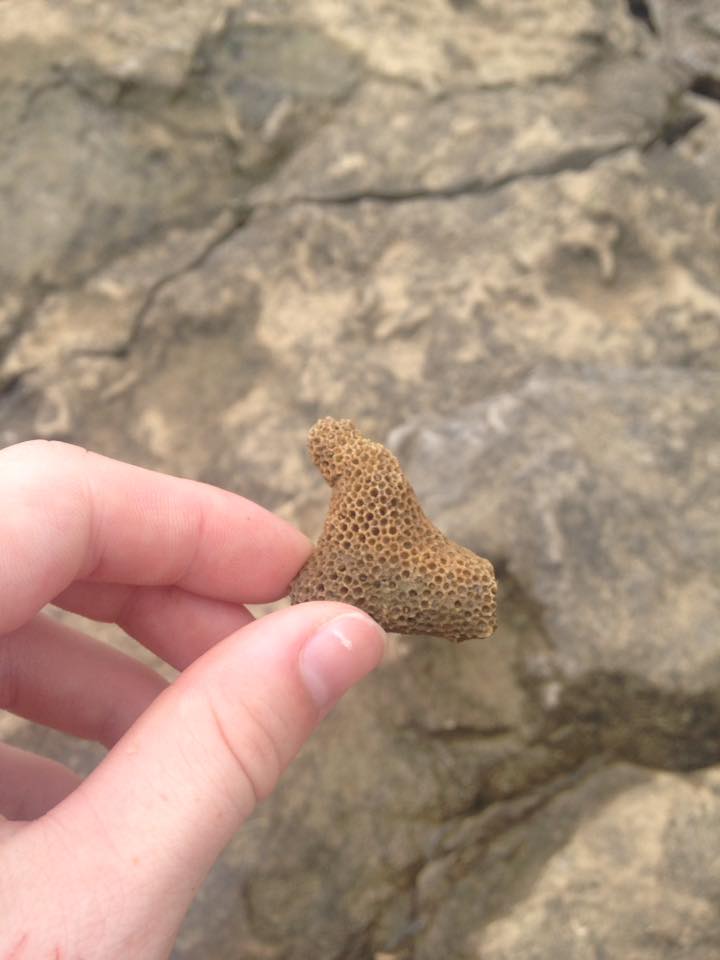
Horn Coral imprints? Or Tusk Corals?: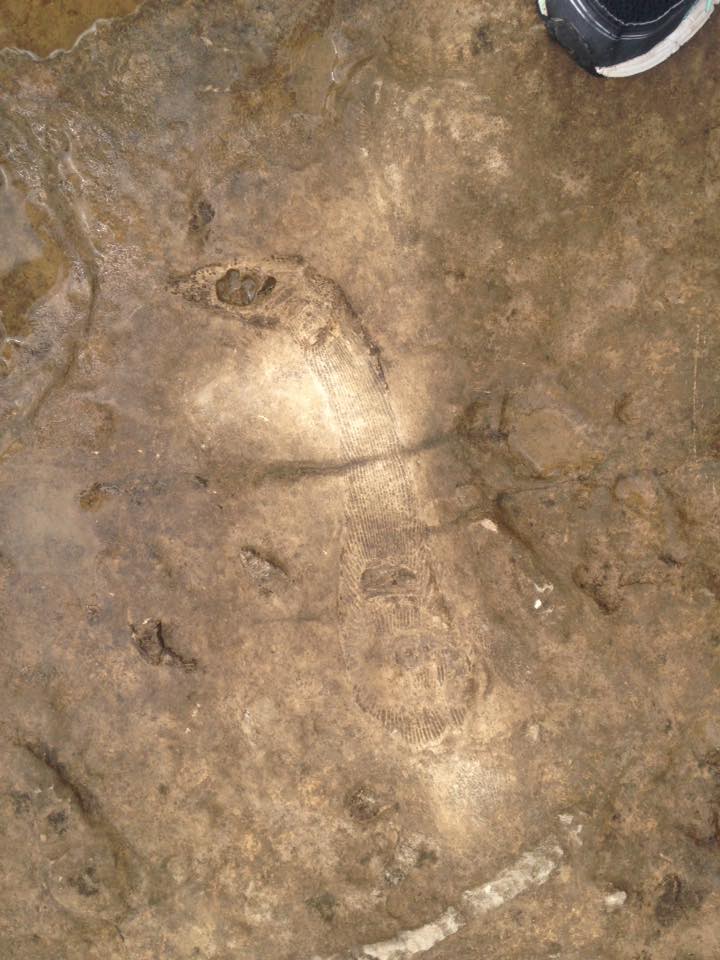
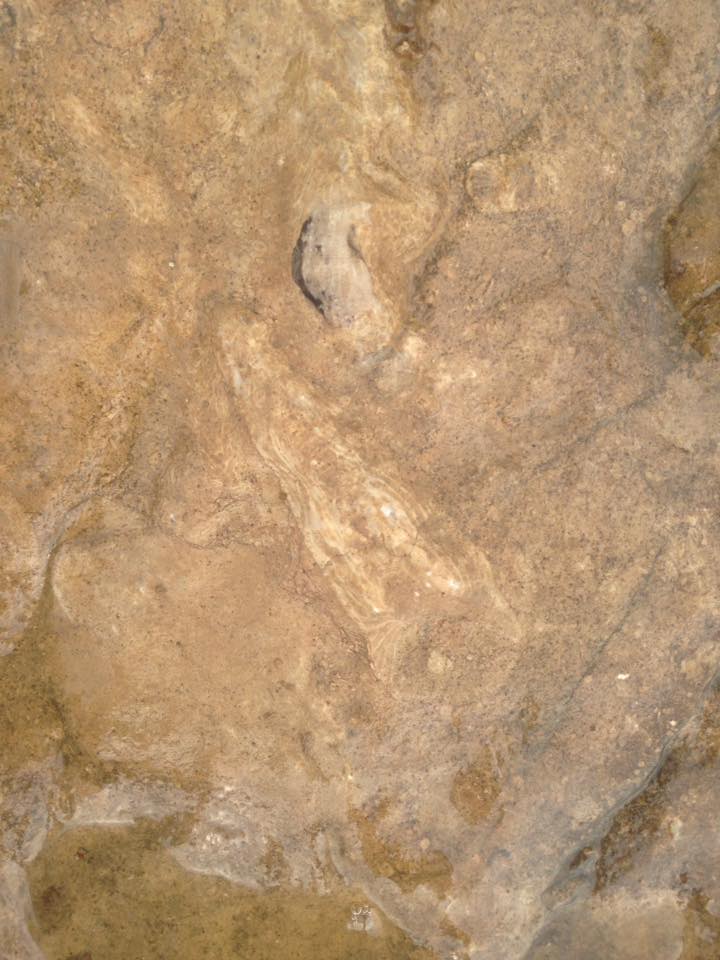
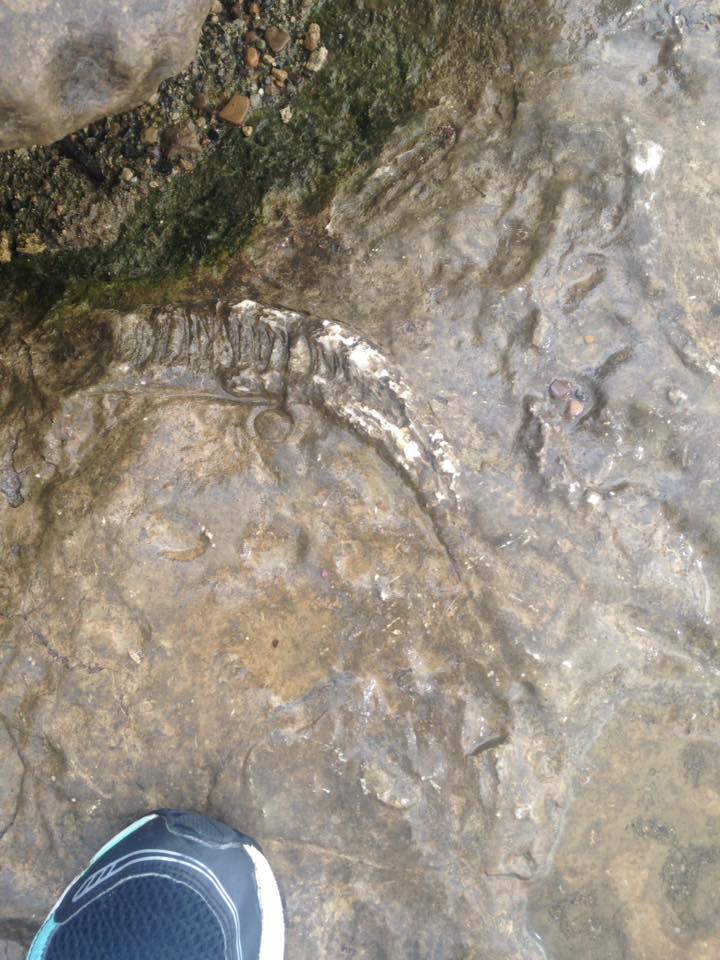
This looks like Wasp’s Nest Coral.: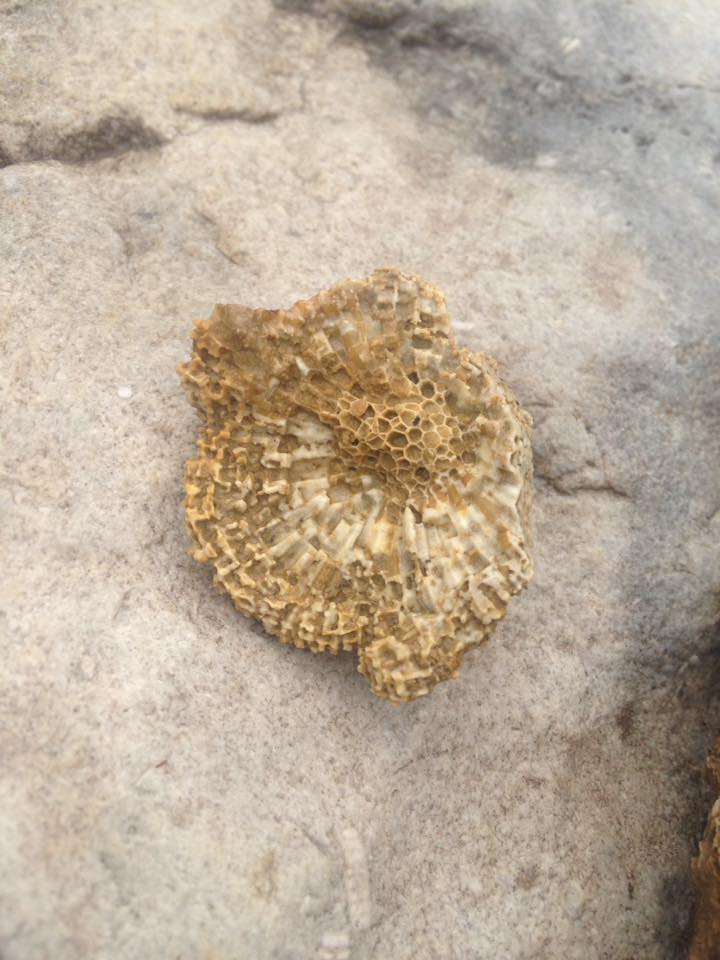
Fossils That I Can’t Even Attempt To Identify:
Clearly an imprint of something – but we couldn’t tell exactly what.: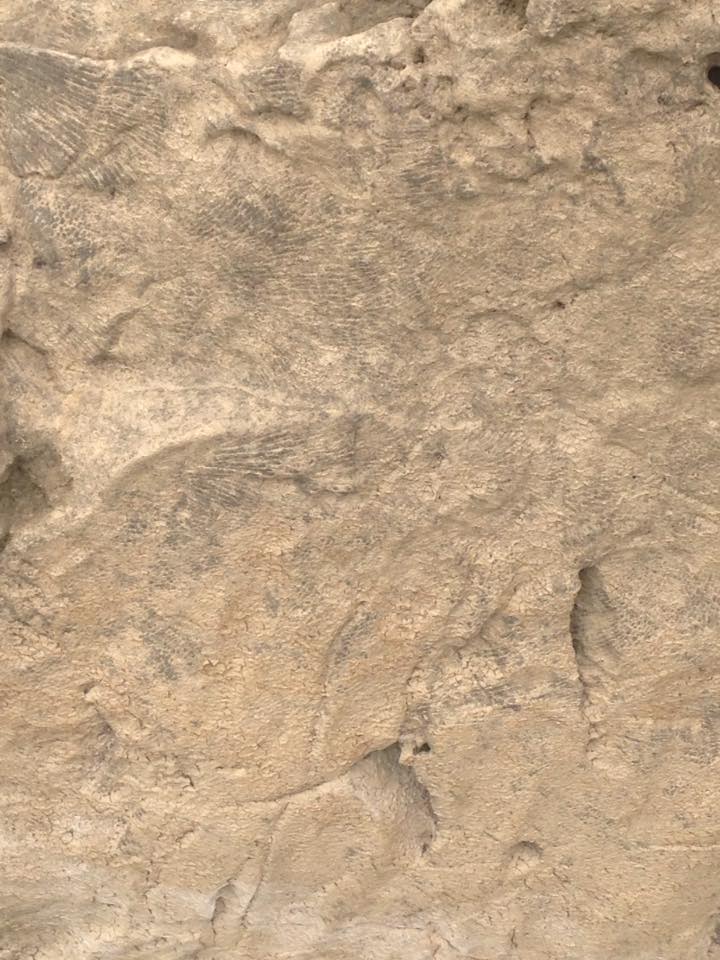
We never could figure out what those black spots/streaks were. It could be some type of fossil, or it could be carbon.:
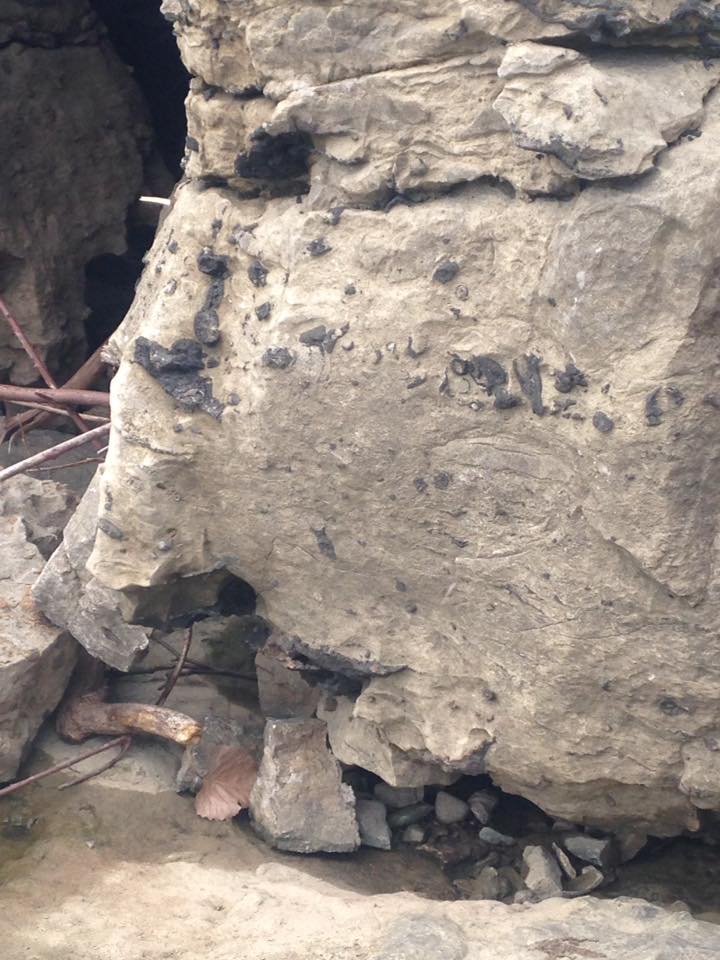
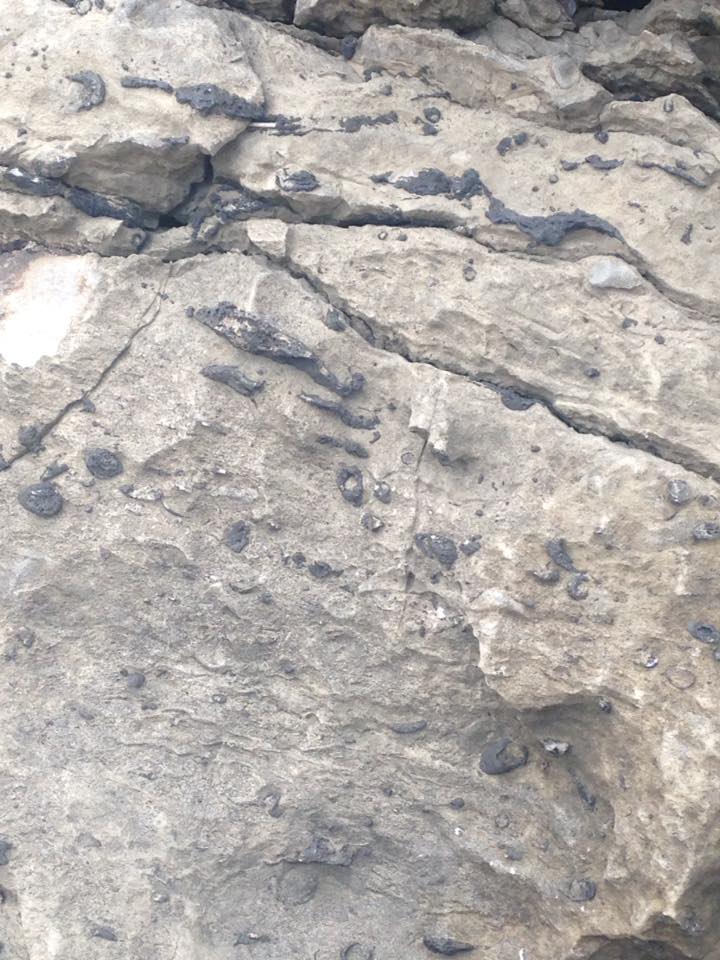
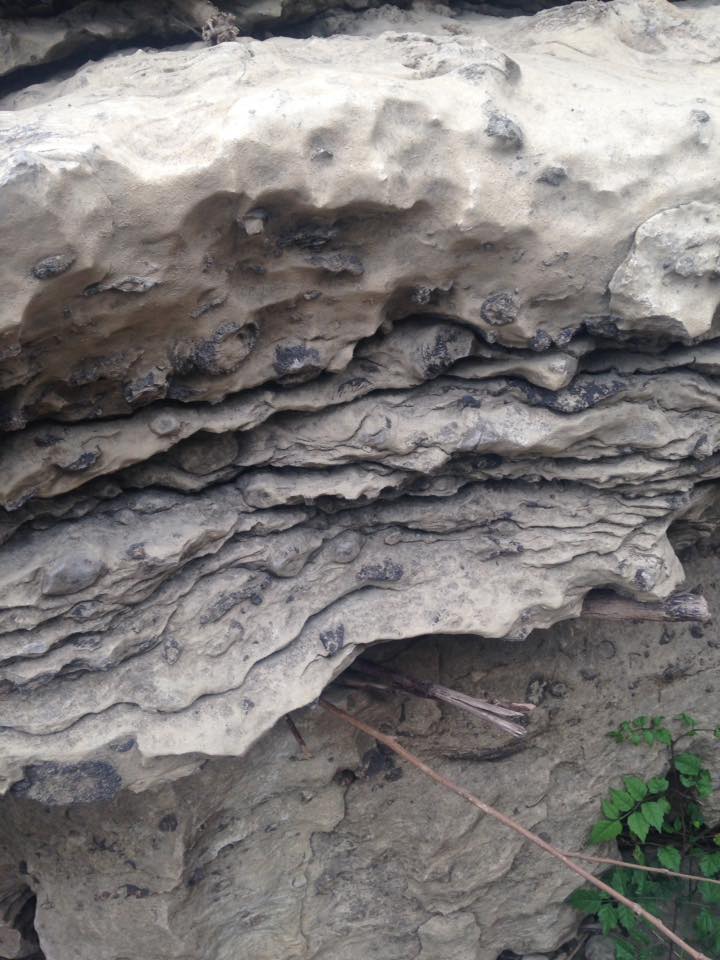
I honestly have no idea what this is – probably came from some type of coral or barnacle, or something.: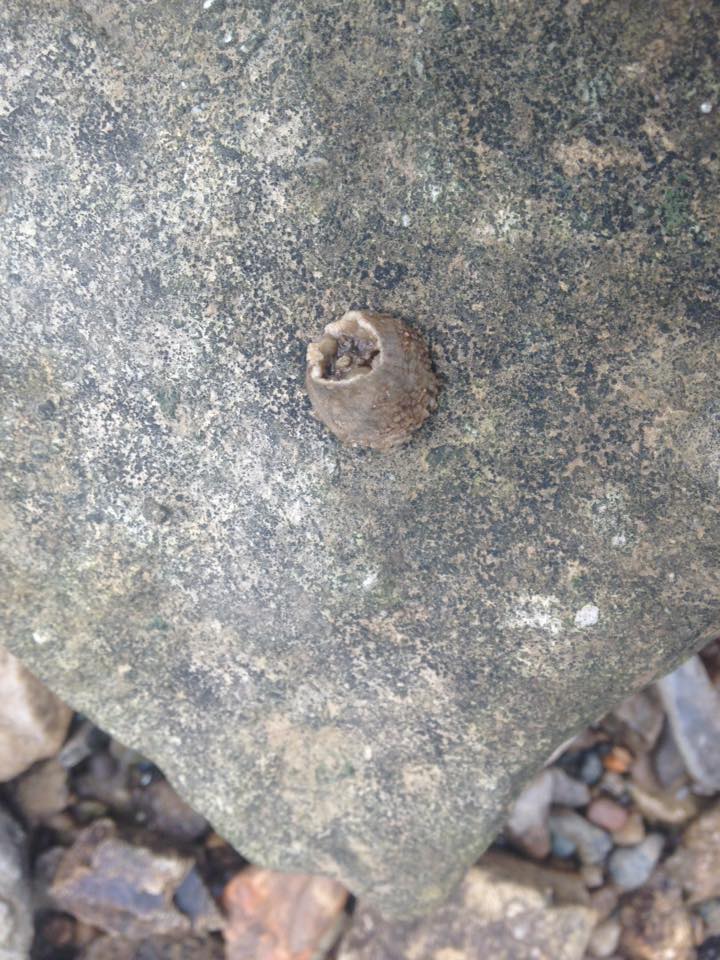
Absolutely no idea what these are…


Cool-Looking Rocks:


The Fossil Bed Area:

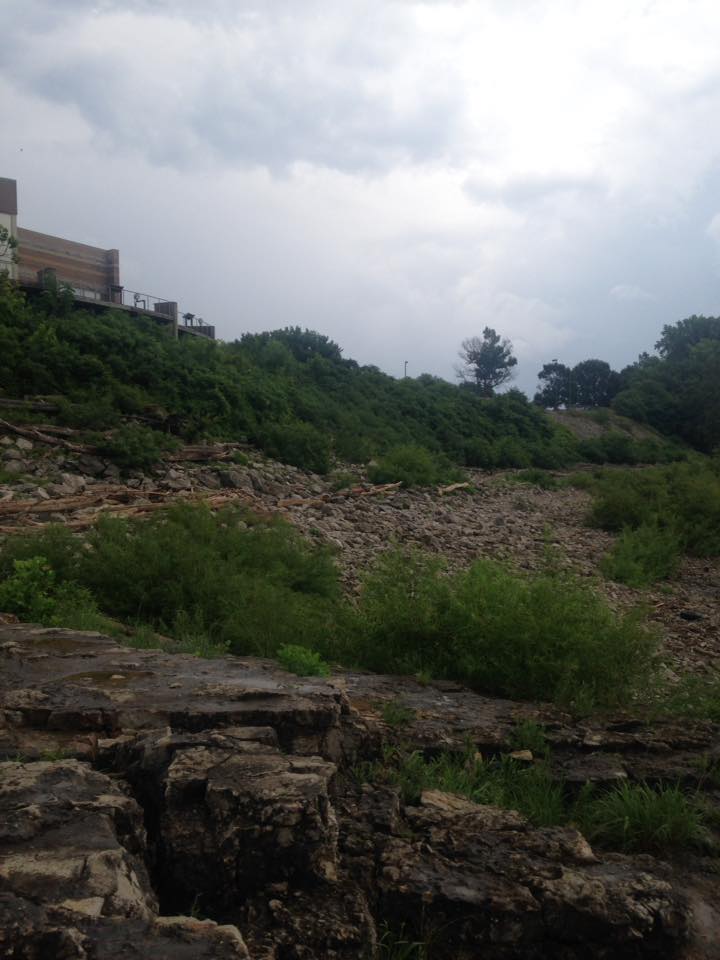

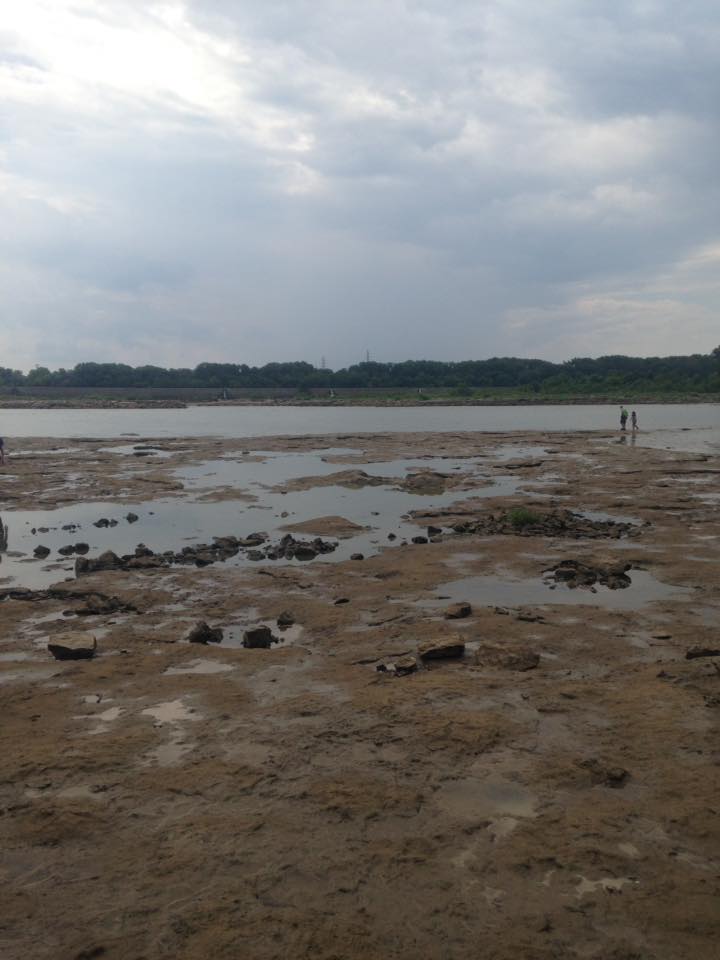
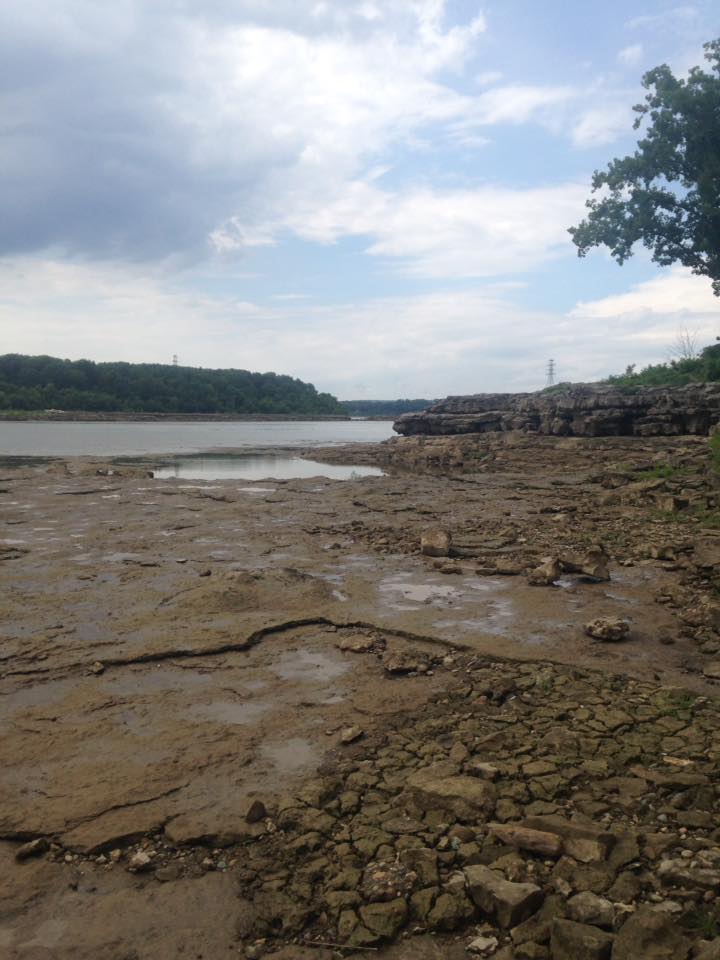
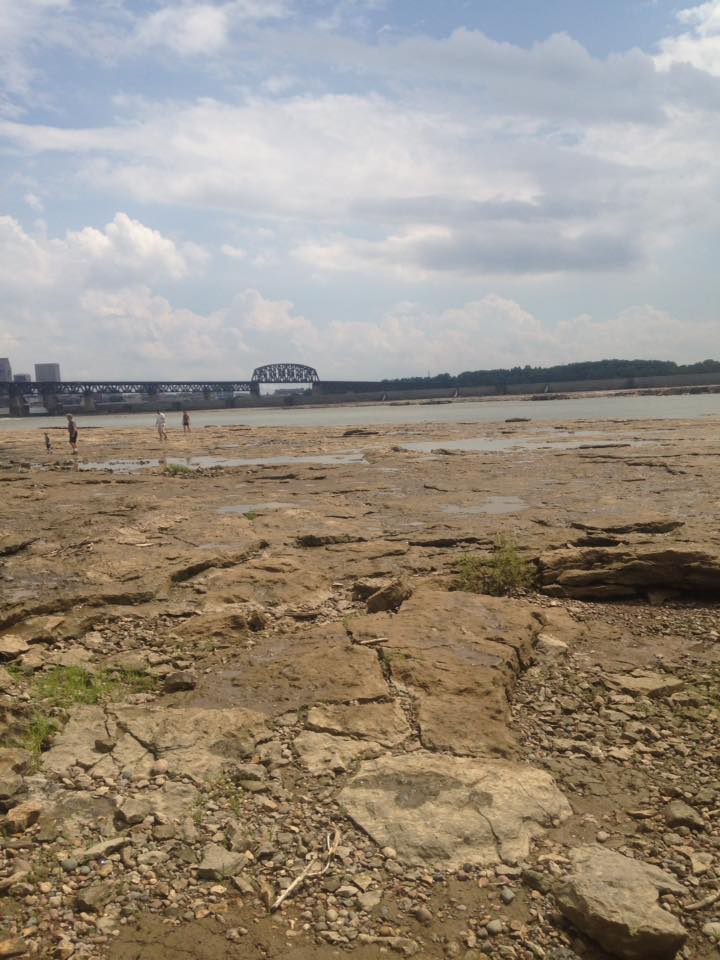
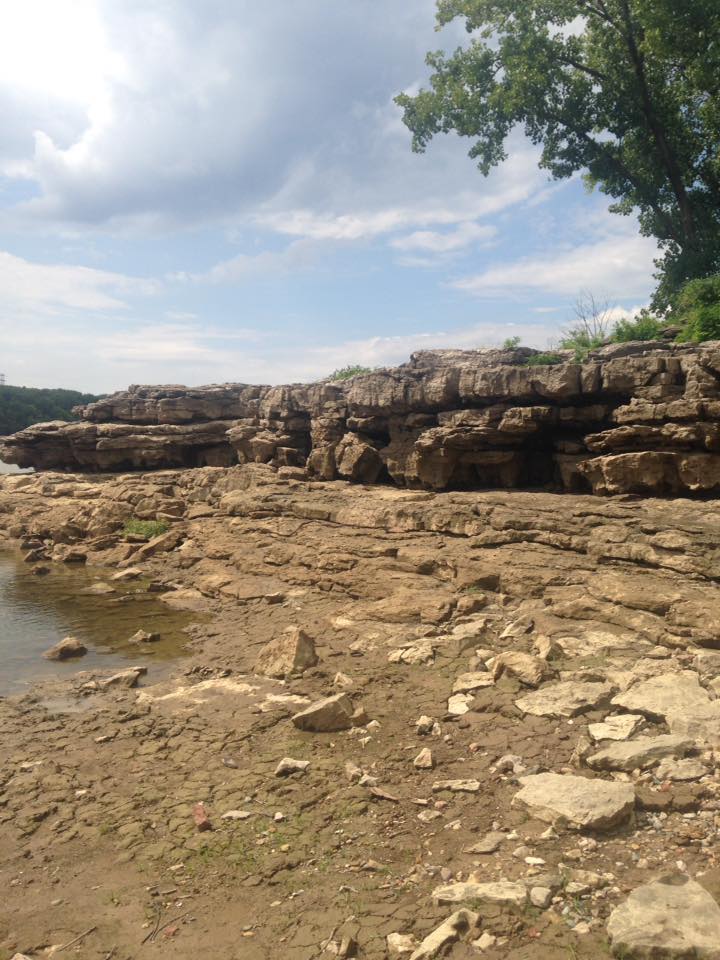
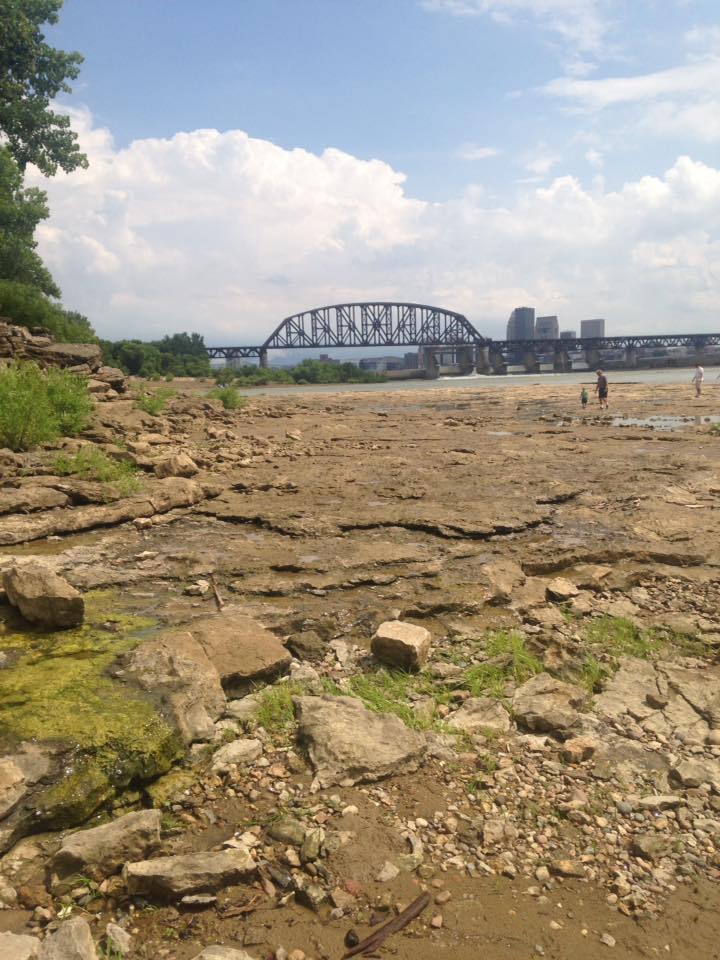
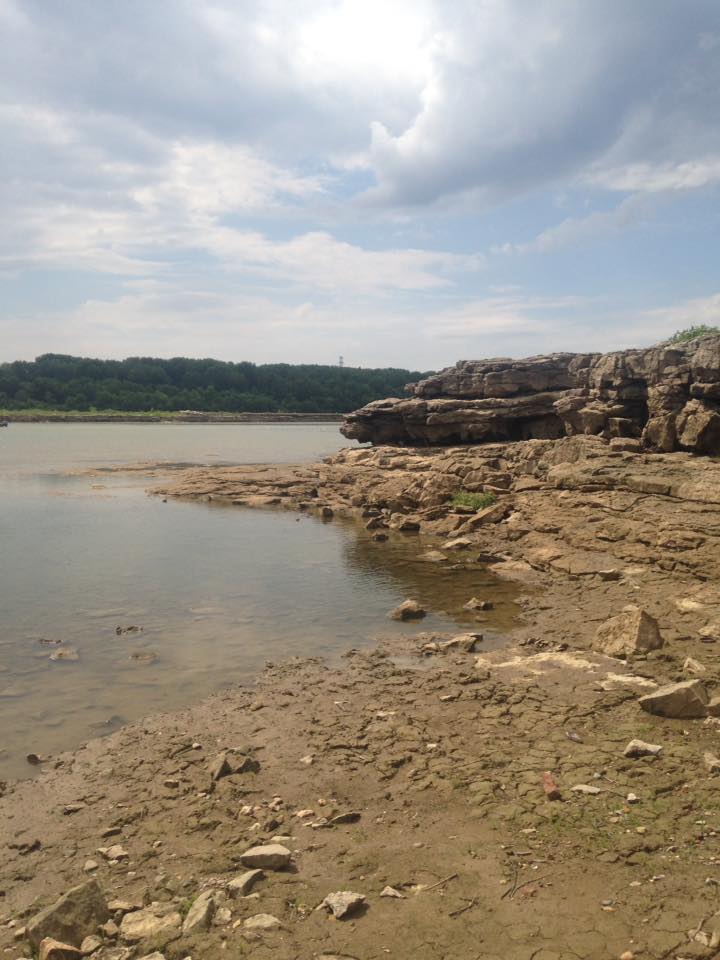
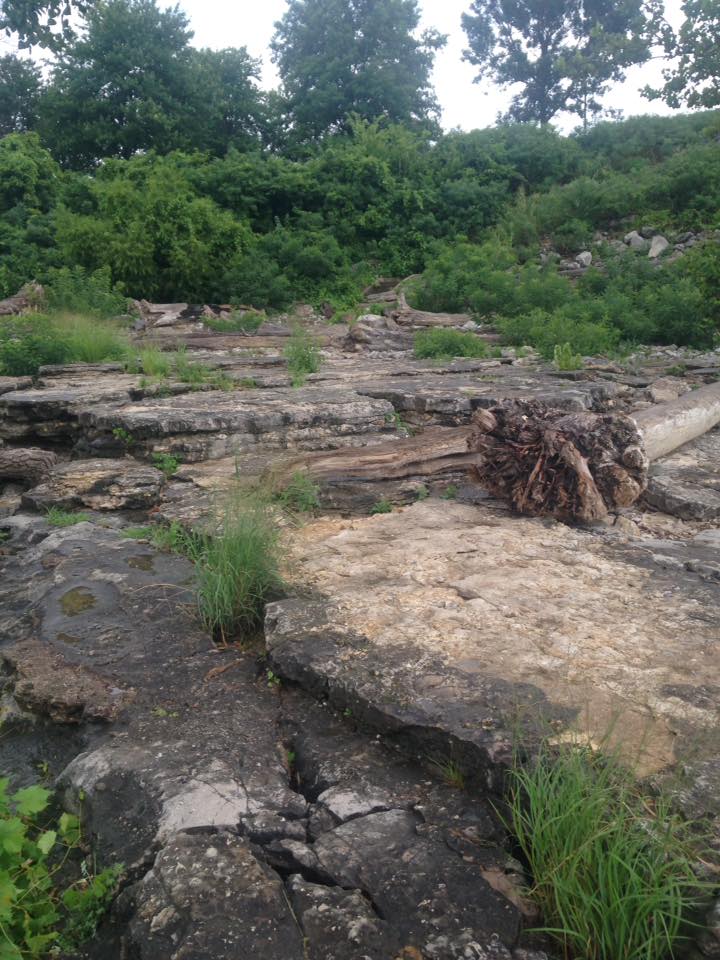
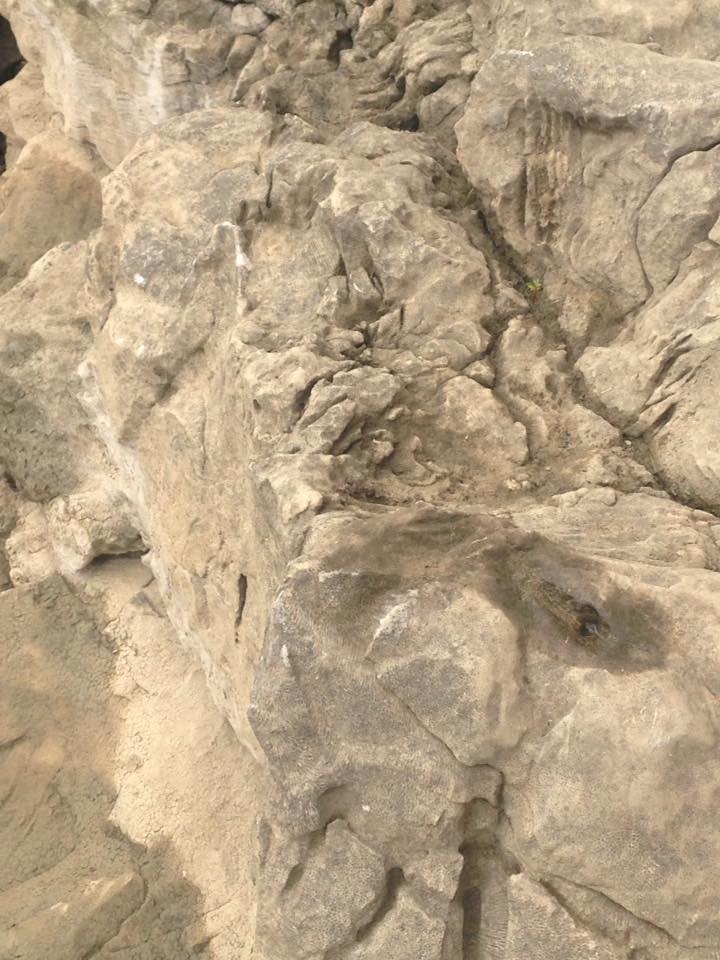

Now, obviously these pictures are only a small fraction of how many fossils are actually out there on the fossil beds. (You honestly have no idea how tempting it was to pocket a few of those rocks and loose fossils that weren’t embedded.)
And lastly…here are a few pictures of me (that my mom took on her phone) derping around on the fossil beds:


Aaaaand this is all I have for you today, I hope you enjoyed this and found it somewhat informative/interesting. Again, I would highly recommend visiting The Falls of the Ohio, it was a lot of fun!
Catch you guys later!
-Rissy ❤
 rissy stories
Leave a comment